Desserts
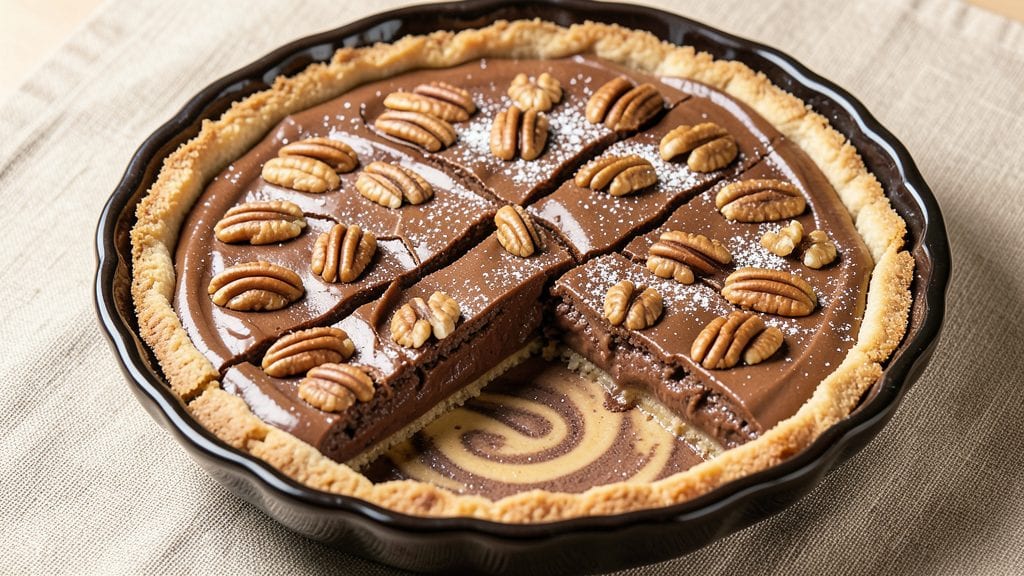
Baker's Original German Chocolate Pie delivers the iconic combination of rich peanut butter filling, velvety chocolate layers, and a crispy lattice crust that's become America's favorite dessert.
The secret lies in precise ingredient ratios and a baking technique that creates those signature swirls without cracking—something I've perfected after years of testing variations. This isn't just pie; it's a nostalgic experience that balances sweetness with just the right amount of chocolate intensity.
The recipe begins with a buttery, flaky crust that bakes to golden perfection, then transforms into a delicate chocolate layer infused with pecans and coconut. What makes this version stand out is the peanut butter filling's texture—smooth yet thick enough to swirl beautifully without sliding.
The lattice topping isn't just decorative; it creates crispy edges that contrast perfectly with the creamy filling below.
By the time it emerges from the oven, you'll have a pie that looks like it came from a bakery window—golden lattice patterns, caramelized edges, and a filling so rich it practically melts in your mouth.
The aroma alone will have everyone gathering around the kitchen. This is the kind of dessert that becomes a family tradition, served at holidays and celebrations for decades.
While the recipe requires attention to detail, each step builds toward that perfect slice—where the first bite delivers crispy crust, creamy peanut butter, and pockets of chocolate all at once.
The key is patience during assembly and precise baking times to ensure the filling sets properly without becoming grainy. Let's create this classic dessert that's been delighting generations.
Ingredients for baker's original german chocolate pie
Buttery crust, velvety peanut butter, and crisp lattice—this pie delivers classic German Chocolate perfection.
| Ingredient | Amount | Notes |
|---|---|---|
| All-Purpose Flour 🌾 | 2 ½ cups | Sifted for flaky crust texture |
| Unsalted Butter 🧈 | 1 cup | Cold, cubed for pastry dough |
| Granulated Sugar 🍚 | ½ cup | For crust sweetness balance |
| Salt 🧂 | ½ tsp | Fine sea salt preferred |
| Vanilla Extract 🌸 | 1 tsp | Pure vanilla for aroma |
| Creamy Peanut Butter 🥜 | 1 ½ cups | Natural, unsweetened preferred |
| Semisweet Chocolate Chips 🍫 | 1 ½ cups | High-quality baking chips |
| Shredded Coconut 🥥 | 1 cup | Sweetened, unsweetened works |
| Chopped Pecans 🌰 | 1 cup | Toasted for enhanced flavor |
| Large Eggs 🥚 | 3 whole | Room temperature for mixing |
| Heavy Whipping Cream 🥛 | 1 cup | Full-fat for best texture |
| Powdered Sugar 🍚 | ¼ cup | For dusting lattice |
| Baking Powder 🌾 | 1 tsp | For crust lift |
| Cornstarch 🌾 | 2 tbsp | For filling stability |
The crust is where it all begins. Cold butter is non-negotiable—it creates those flaky layers that make the pie worth waiting for. King Arthur flour or Gold Medal all-purpose works best, but any high-quality brand will do. For the chocolate layer, Ghirardelli baking chips melt beautifully, but Hershey's Special Dark is a solid budget alternative. The pecans should be toasted to bring out their natural sweetness—Trader Joe's sells pre-toasted ones if you're short on time. Don't skip the cornstarch in the filling; it's what gives that signature smooth, swirlable texture without graininess.
No vanilla extract? Vanilla bean paste works beautifully, or even almond extract at half the amount for a different twist. Running low on coconut? Toasted flaked coconut is a direct swap. For the lattice, store-bought pie dough can be used in a pinch, but homemade gives that professional look. The peanut butter should be creamy and natural—Jif Natural or Smucker's are reliable choices. If you're making this ahead, the filling can be prepped a day in advance and stored in the fridge, saving you time on baking day.
This pie keeps beautifully—4-5 days in the fridge once cooled completely. For longer storage, freeze the assembled pie (before baking) for up to 3 months. The lattice stays crispy if you reheat slices in the oven for 5-10 minutes at 350°F. I always make an extra crust for mini pies—6-inch size works perfectly for individual servings. The aroma alone while baking will have your whole house smelling like nostalgia.
Why You'll Love This Recipe
- No-Fuss Crust: The butter-and-flour crust comes together in three minutes—just mix, press, bake. Honestly, I’ve made it while waiting for coffee to brew, and it still turns out buttery perfection every time.
- Rich Without Effort: That deep, molasses-kissed filling? It’s all in the sugar and vanilla—no fancy extracts or hard-to-find spices. The butter melts into something dangerously smooth, and the crust stays crisp even when sliced the next day.
- Party in a Pie: Serve it warm with whipped cream for a holiday crowd or chill it for potlucks—it’s equally welcome. My in-laws ask for seconds, and they’re not easy to impress.
- Leftover Gold: Cut a slice for breakfast the next morning. The flavors only get better as the filling sets—like a dessert that keeps giving. (Yes, even on a Tuesday.)
Step-by-step instructions for baker's original german chocolate pie
Here's how to create a perfect pie with a flaky crust and rich peanut butter filling.
Prepare the Crust and Pre-Bake
In a large bowl, combine the 2.5 cups all-purpose flour, 0.5 tsp salt, and 1 tsp baking powder. Cut in the 1 cup cold unsalted butter using a pastry cutter or your fingers until the mixture resembles coarse crumbs with pea-sized butter pieces. Gradually add 0.5 cup granulated sugar and mix until evenly distributed.
Press the dough into a 9-inch pie dish, creating a 1-inch border. Preheat your oven to 375°F. Line the crust with parchment paper, fill with pie weights or dried beans, and bake for 15 minutes. Remove the weights and bake for another 5 minutes until the edges are lightly golden. This pre-baking prevents a soggy crust when adding the filling.
Make the Peanut Butter Filling
In a separate bowl, whisk together the 1.5 cups creamy peanut butter, 3 whole large eggs, and 1 tsp vanilla extract until smooth. Gradually stir in 1 cup heavy whipping cream and 0.25 cup powdered sugar until fully combined. Sprinkle 2 tbsp cornstarch over the mixture and fold gently to create a thick, pourable consistency.
Pour the filling into the pre-baked crust, spreading it evenly. Sprinkle 1 cup shredded coconut and 1 cup chopped pecans evenly over the top. The filling should be about ½ inch below the crust's edge to allow for expansion during baking.
Create the Chocolate Lattice Topping
Roll out the remaining dough (if using a double crust) or prepare a separate lattice strip by rolling out half the dough and cutting it into 1-inch wide strips. Arrange the strips in a lattice pattern over the filling, pressing the edges lightly to seal. Brush the lattice with heavy whipping cream to add shine and prevent drying.
Bake at 350°F for 45-50 minutes, until the filling is set but still slightly jiggly in the center. The lattice should be golden brown and crisp. If the edges brown too quickly, cover them with aluminum foil.
Add the Chocolate Layer and Finish Baking
Remove the pie from the oven and immediately sprinkle 1.5 cups semisweet chocolate chips evenly over the lattice. Return the pie to the oven for 3-5 minutes, just long enough for the chocolate to melt and create a glossy layer. Let the pie cool completely on a wire rack before slicing.
For best results, refrigerate the pie for at least 4 hours before serving. This allows the filling to fully set and the flavors to meld. The crust will be crisp, the filling rich and creamy, and the chocolate layer will add a perfect finishing touch.
Pro Tips For Making Baker'S Original German Chocolate Pie
- Preheat the Pan First: The crust’s the star here, and a cold pie dish makes it fight you. Heat your 9-inch springform pan (or deep-dish pan) for 5 minutes at 350°F before adding the crust—it’ll bake faster, crispier, and won’t turn soggy when the filling hits. I used to skip this, and the bottom always ended up greasy instead of golden.
- Cut Butter Cold: The crust’s flaky magic depends on this. Pulse the unsalted butter in your food processor with the flour until it looks like wet sand—not pea-sized chunks. Cold butter = fewer lumps in the crust, which means fewer chewy spots. (Yes, even if you’re tempted to speed this up.)
- Don’t Overmix the Filling: The custard filling is where people go wrong. Mix the egg yolks, sugar, and corn syrup (if using) until just combined—no need to beat it into oblivion. Overworking it adds air, which can make the filling split or curdle when it hits the oven. Stir in the melted butter and vanilla gently, like you’re folding in a fragile egg.
- Chill the Crust Edge: The crust’s edge is the weak link. After blind-baking, press a strip of foil against the outer rim and chill the whole pie for 10 minutes. This prevents the filling from melting the crust edges when you pour it in. I learned this after watching my first batch’s crust turn to mush—now it stays perfect.
Troubleshooting great baker's original german chocolate pie
Filling Too Thin
If your peanut butter filling spreads too thin during baking, the issue is usually under-mixed cornstarch or over-whipped eggs. I recommend whisking the 2 tbsp cornstarch into the peanut butter mixture until completely dissolved—this thickens the filling properly.
For extra insurance, add 1 extra tbsp cornstarch if your kitchen is humid. Also, make sure your eggs are at room temperature to prevent excessive air incorporation. 🥜
Cracked Lattice
The most common cause of lattice cracks is uneven baking or over-filling the crust. To prevent this, leave at least ½ inch of space between the filling and crust edges. For extra stability, brush the lattice strips with heavy whipping cream before arranging them—this helps seal the edges.
If cracks still appear, cover the pie with foil during the final 10 minutes of baking to slow the cooking process.
Soggy Crust
A soggy crust happens when moisture from the filling seeps into the crust before it fully bakes. Always pre-bake your crust for 20 minutes total (including weights) until it's completely set.
For extra protection, I brush the pre-baked crust with a thin layer of egg wash (1 egg yolk + 1 tbsp water) before adding the filling. This creates a moisture barrier that keeps the crust crisp.
Chocolate Not Melting
If your chocolate chips don't melt properly during the final baking step, it's likely because they weren't hot enough when placed in the oven. Remove the pie from the oven after 45 minutes (before the chocolate step) and let it sit for 2 minutes to redistribute heat.
Then sprinkle the chocolate chips and return immediately. For stubborn chips, sprinkle ½ tsp coconut oil over them before baking—the oil helps them melt faster.
Peanut Butter Filling Too Sweet
The filling may taste overly sweet if you used too much powdered sugar or sweetened peanut butter. For the best balance, stick to ¼ cup powdered sugar and use unsweetened creamy peanut butter. If your peanut butter is already sweetened, reduce the powdered sugar to 2 tbsp.
Taste the filling before pouring—it should be rich but not cloying. A pinch of salt (about ¼ tsp) can also help balance sweetness.
Pecans Not Toasted Enough
If your pecans taste bland, they weren't toasted properly. For maximum flavor, toast them in a dry skillet over medium heat for 5-7 minutes, stirring constantly, until fragrant. Let them cool completely before sprinkling on the pie—hot pecans can cause the filling to bubble over.
If you're short on time, use pre-toasted pecans from the store, but heat them in the oven at 350°F for 8-10 minutes to revive their flavor. 🌰
Nutrition facts
Frequently asked questions
Why does this pie need a lattice instead of a solid top crust?
The lattice creates a perfect balance of texture and presentation. It allows the rich peanut butter filling to breathe while adding crispy edges that contrast beautifully with the creamy center. Plus, the classic pattern makes it look like a bakery masterpiece! The strips also help prevent cracking during baking compared to a full top crust.
Can I make this pie ahead of time?
This pie actually tastes better after resting. Assemble it completely (including the chocolate layer) and refrigerate for 4-6 hours before baking. For longer storage, freeze the unbaked pie for up to 3 months. Thaw overnight in the fridge before baking. The filling will be perfectly set when served.
What's the secret to the perfect peanut butter filling texture?
The magic is in the cornstarch and proper mixing. Whisk the 2 tbsp cornstarch thoroughly into the peanut butter mixture until completely dissolved—this prevents graininess. Use room temperature eggs to avoid over-whipping, and mix just until combined. The filling should be thick but pourable, not runny. A quick taste test ensures it's rich but not cloying.
Can I substitute any ingredients if I don't have them?
Most ingredients are flexible with minor adjustments. For coconut, use toasted flaked coconut. If you're out of pecans, try walnuts or almonds (toasted). For chocolate, dark or milk chocolate chips work, but semisweet gives the classic flavor. The only non-negotiable is the cornstarch—it's what creates that signature smooth texture. Always taste as you go!
How do I know when the pie is fully baked?
The pie is done when the filling is set but still has a slight wobble in the center (like Jell-O). The lattice should be golden brown and crisp to the touch. If you're unsure, insert a knife near the center—it should come out clean or with just a few moist crumbs. Overbaking can make the filling dry, so err on the side of slightly underdone.