
Desserts
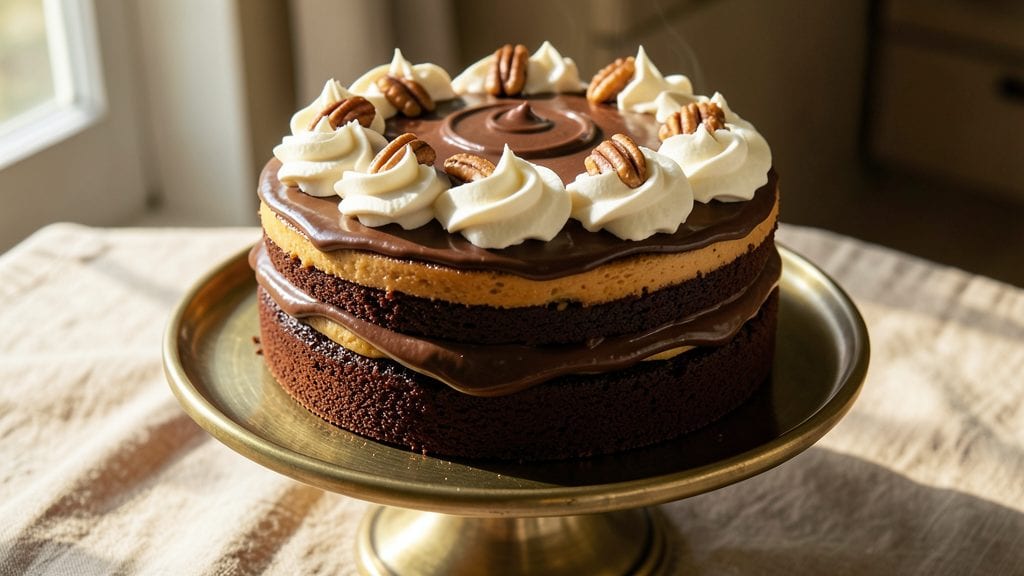
Barefoot Contessa's German chocolate cake recipe delivers the perfect balance of rich chocolate layers and nutty pecan swirls that make every slice irresistible. This iconic dessert combines a moist chocolate cake with a velvety chocolate glaze and a signature pecan-praline filling that takes it to another level.
I've baked this version countless times, and it never fails to impress—whether for a special occasion or a weekend treat.
The secret to this cake lies in its layers: a fudgy chocolate base, a swirl of pecan-praline filling, and a glossy chocolate glaze that ties everything together. Baking at 350°F ensures a perfectly golden crust while keeping the interior tender and moist.
The recipe uses simple ingredients—flour, cocoa powder, eggs, and butter—but the technique transforms them into something extraordinary. Even beginners can achieve professional results with these precise steps.
What you'll end up with is a cake that looks stunning on the plate and tastes even better—a perfect harmony of chocolate, nuts, and sweetness. The pecan-praline swirl adds a delightful crunch, while the glaze gives it that restaurant-quality finish.
This cake is ideal for celebrations, but it's so good, you might not want to wait for a special occasion. Let's get baking!
Once you try this version, you'll understand why it's a classic. The combination of textures and flavors makes it unforgettable, and the instructions are straightforward enough for anyone to follow.
Whether you're a seasoned baker or just starting out, this recipe will become a staple in your dessert repertoire. Ready to create something truly special?
Ingredients for barefoot contessa german chocolate cake
Simple pantry staples transform into legendary German chocolate cake with pecan-praline magic.
| Ingredient | Amount | Notes |
|---|---|---|
| All-Purpose Flour 🌾 | 3 cups | Sifted for even texture |
| Unsalted Butter 🧈 | 2 cups | Room temperature, European-style preferred |
| Granulated Sugar 🍚 | 2 ¼ cups | Superfine for smoother batter |
| Dark Brown Sugar 🍚 | 1 ¼ cups | Packed firmly for accuracy |
| Unsweetened Cocoa Powder 🍫 | ¾ cup | Dutch-processed for richer flavor |
| Large Eggs 🥚 | 4 whole | Room temperature, separated |
| Vanilla Extract 🍯 | 2 tsp | Pure Madagascar bourbon preferred |
| Baking Powder 🍞 | 1 ½ tsp | Aluminum-free for stability |
| Salt 🧂 | ½ tsp | Diamond Crystal kosher |
| Hot Water 💧 | 1 ½ tbsp | For dissolving cocoa powder |
| Pecans 🌰 | 2 cups | Chopped, toasted for depth |
| Light Corn Syrup 🍯 | ½ cup | For pecan-praline filling |
| Semisweet Chocolate Chips 🍫 | 1 ½ cups | High-quality, 60% cocoa |
| Heavy Cream 🥛 | ½ cup | Whipped for glaze |
| Powdered Sugar 🍚 | 1 ½ cups | Sifted for smooth glaze |
The butter and sugars are where this cake shines. European-style butter (like Plugrá or President) adds richness, but any good unsalted works. Superfine sugar dissolves better—if you only have regular, pulse it in a food processor for 30 seconds. The cocoa powder is non-negotiable: Dutch-processed (like Callebaut) gives that signature smoothness. Pecans? Trader Joe's or Costco sell pre-toasted ones—skip the raw, trust me. Toast your own by spreading on a sheet pan at 350°F for 8-10 minutes if you're ambitious. The corn syrup in the filling is key—Karo is the gold standard, but any light corn syrup works.
No vanilla extract? Seeds from 1 vanilla bean work perfectly—split it open and scrape out the good stuff. Short on pecans? Walnuts or hazelnuts add different but delicious textures. The chocolate chips can be chopped bars if that's what you've got—just melt them first. For the glaze, if you're nervous about whipping cream, powdered sugar + 1 tbsp milk makes a quick frosting alternative. The cake batter is delicate—don't overmix after adding the eggs, or you'll end up with a tough crumb. And yes, the hot water for the cocoa is purposeful—it dissolves it completely for that ultra-smooth texture.
This cake keeps beautifully. 3-4 days at room temperature in an airtight container, or 1 week in the fridge. Freeze the entire cake (unfrosted) for up to 3 months—thaw overnight at room temp before adding the glaze. The filling and glaze can be made 1 day ahead, which is genius for stress-free baking. Store the glaze separately and assemble just before serving. Pecans get stale fast, so if you're prepping ahead, toast them fresh the day you bake. Trust me, the difference is noticeable.
Why You'll Love This Recipe
- No-Fuss Layers: This cake comes together in one bowl—no mixer required. Just cream butter and sugars, fold in dry ingredients, and you’re done. Honestly, the only tricky part is resisting seconds while it bakes.
- Rich Chocolate Magic: That mix of dark brown sugar and cocoa powder? It’s what makes this cake dangerously good—deep, caramel-like sweetness with a velvety chocolate base. The buttercream frosting ties it all together like a hug.
- Party or Pajamas: Slice it for a birthday spread or grab a piece straight from the fridge after work. Between us, it’s just as welcome at a dinner party as it is on a lazy Sunday morning. (Yes, even with pajamas on.)
- Budget-Friendly Indulgence: Uses pantry staples—flour, butter, sugar—and stretches for days. My kids beg for it, and the leftovers disappear faster than I can say “second slice.” Plus, you’ll spend less than $10 for a whole cake. Worth it.
Step-by-step instructions for German chocolate cake
Let's create a decadent German chocolate cake with rich layers and pecan-praline swirls that will impress everyone.
Prepare the Pecan-Praline Filling
In a medium saucepan, combine the 2 cups pecans, 0.5 cup light corn syrup, and 1.5 cups semisweet chocolate chips. Cook over medium-low heat, stirring constantly until the mixture melts and thickens to a fudgy consistency—about 8-10 minutes. You'll know it's ready when it pulls away from the sides of the pan and coats the back of a spoon smoothly. Remove from heat immediately and let it cool to room temperature before using.
This filling is the heart of the German chocolate cake, delivering that signature caramelized pecan flavor. If the mixture seems too thick, add 1 teaspoon hot water to loosen it slightly. Let it cool completely to prevent melting when you add it to the cake layers later.
Cream Butter and Sugars for the Cake Batter
In a stand mixer fitted with the paddle attachment, beat the 2 cups unsalted butter and 2.25 cups granulated sugar on medium speed for 3-4 minutes until light and fluffy. The mixture should nearly double in volume and become pale in color. This step is crucial for creating a tender, moist cake. Scrape down the sides of the bowl with a spatula to ensure even mixing.
Next, add the 1.25 cups dark brown sugar and mix until fully combined. The brown sugar adds depth of flavor and a subtle molasses note that balances the richness of the butter. Add the 4 whole large eggs, one at a time, mixing well after each addition. Finally, stir in the 2 teaspoons vanilla extract until smooth. This creaming process incorporates air into the batter, which helps the cake rise beautifully.
Combine Dry Ingredients and Fold in Chocolate
In a separate bowl, sift together the 3 cups all-purpose flour, 1.5 teaspoons baking powder, and 0.5 teaspoon salt. This ensures an even distribution of leavening agents and prevents lumps in the batter. Gradually add the dry ingredients to the wet mixture, mixing on low speed until just combined. Avoid overmixing—you should still see a few flour streaks. The batter should be thick but pourable.
Remove the bowl from the mixer and gently fold in the 1.5 cups semisweet chocolate chips using a silicone spatula. This step ensures even distribution of chocolate throughout the cake. Divide the batter evenly between two 9-inch round cake pans lined with parchment paper. Spread the batter smoothly to create even layers.
Bake the Cake Layers
Preheat your oven to 350°F. Bake the cake layers for 25-30 minutes, or until a toothpick inserted into the center comes out clean. The edges should be golden brown, but the top may still look slightly underbaked. Rotate the pans halfway through baking for even cooking. Let the cakes cool in the pans for 10 minutes, then transfer to a wire rack to cool completely before assembling.
This baking time ensures a tender, moist cake with a slight fudgy texture. If the tops brown too quickly, tent the pans with foil to prevent overbrowning. The cakes should be fully cooled before adding the filling to avoid melting.
Assemble and Glaze the Cake
Once the cake layers are completely cool, place one layer on a serving plate. Spread the cooled pecan-praline filling evenly over the top, leaving a ½-inch border uncovered. Place the second layer on top and press gently to create a seamless cake. This step is where the magic happens—the filling oozes out slightly, creating those beautiful swirls.
To make the glaze, whip the 0.5 cup heavy cream until soft peaks form. Gradually add the 1.5 cups powdered sugar, mixing until smooth and glossy. Drizzle the glaze evenly over the top and sides of the cake. For extra flair, sprinkle additional chopped pecans or semisweet chocolate chips on top. Chill the cake in the refrigerator for 1 hour before serving to allow the glaze to set.
Pro Tips For Making Barefoot Contessa German Chocolate Cake
- WEIGH THE COCOA: The recipe calls for 3 ounces of cocoa powder—but don’t eyeball it. A kitchen scale guarantees that rich, fudgy texture without bitterness. I used to scoop, and the cake turned out uneven every time. (Yes, even if you’re impatient like me, this is the thing that matters most.)
- CREAM THE BUTTER SLOW: Mix the butter and sugars at medium speed until just pale, not fluffy. The Contessa’s method relies on a smooth, not aerated, base—overbeating traps air that makes the cake dense. I learned this the hard way after a batch turned out like a brick.
- STOP WHEN TESTERS COME OUT CLEAN: The recipe says 35–45 minutes, but pull it when a toothpick has moist crumbs, not wet batter. German chocolate cake stays tender if you resist overbaking. I know, I know—you want it fully set—but trust the process.
- SWAP THE BUTTERMILK: If you’re fresh out, use 1 tablespoon vinegar or lemon juice mixed with ¾ cup milk. It reacts the same way, and the cake won’t be flat or gummy. (Your future self will thank you for not scrambling to the store.)
Troubleshooting your barefoot contessa german chocolate cake
Cake Too Dense
If your cake turns out dense instead of light and fluffy, overmixing is usually the culprit. Once you add the dry ingredients to the wet mixture, stop mixing as soon as they're just combined—you should still see small flour streaks.
I've found that using a silicon spatula for the final fold-in of chocolate chips helps preserve that tender crumb. Also, ensure your butter and eggs are room temperature—cold ingredients can weigh down the batter. 💡
Filling Too Runny
The pecan-praline filling can become too thin if cooked too long or if you add too much liquid. To fix this, simply cook it over medium-low heat and remove it immediately when it reaches a thick, fudgy consistency.
If it's still too runny after cooling, chill it in the refrigerator for 15-20 minutes before using. For a thicker texture, reduce the corn syrup by 1 tablespoon next time. The filling should hold its shape but still be spreadable.
Cracked Top or Sinking Center
Cracks or a sunken center often happen when the oven temperature fluctuates or the cakes cool too quickly. To prevent this, preheat your oven for at least 30 minutes before baking and use an oven thermometer to confirm it's at 350°F.
After baking, let the cakes cool in the pans for 10 minutes before transferring to a wire rack. If your oven runs hot, tent the pans with aluminum foil after 20 minutes to prevent overbrowning.
Glaze Not Setting
A glaze that doesn't set properly is usually due to humidity or insufficient chilling. To fix this, whip the heavy cream until it forms stiff peaks before adding the powdered sugar—this ensures stability.
After glazing, place the cake in the refrigerator for 1 hour (or freezer for 30 minutes) to help the glaze firm up. If you're in a humid climate, add 1 teaspoon cornstarch to the powdered sugar for extra hold. A properly set glaze should be glossy but not sticky.
Pecans Not Toasted Enough
Raw pecans can make the filling taste bland and the texture gummy. Always toast your pecans before using them—spread them on a baking sheet and bake at 350°F for 8-10 minutes, stirring halfway.
For extra flavor, toss the toasted pecans with 1 teaspoon cinnamon before adding them to the filling. If you're short on time, use pre-toasted pecans from the store, but toast them for an additional 5 minutes to enhance their flavor. The aroma alone will tell you when they're ready. 🌰
Uneven Layers After Baking
Uneven layers often result from uneven batter distribution or pans that aren't level. To fix this, use 9-inch round cake pans with the same diameter and ensure they're placed on the middle rack of your oven.
Before pouring the batter, tap the pans gently on the counter to remove air bubbles. If your pans are slightly warped, place them on a silicon baking mat for even heat distribution. Always rotate the pans halfway through baking to ensure even cooking.
This will give you perfectly level layers every time.
Nutrition facts
Frequently asked questions about German chocolate cake
Why does this cake need two separate baking sessions?
The two-layer approach creates the signature German chocolate cake texture—moist, fudgy layers with rich pecan-praline swirls in between. Baking them separately ensures even cooking and prevents the filling from melting during baking. This method also gives you perfectly level layers for that professional finish.
Can I substitute walnuts for pecans?
Yes, but the flavor will differ slightly. Walnuts add a different earthy note, while pecans provide that classic buttery sweetness. If substituting, toast them at 350°F for 8-10 minutes first—this enhances their flavor. For authenticity, stick with pecans, but walnuts work in a pinch for nut lovers.
How do I make this cake ahead of time?
Bake the cake layers up to 2 days ahead and store them in an airtight container at room temperature. Assemble the cake (without glaze) up to 1 day ahead and refrigerate. Make the glaze fresh before serving—it sets best when applied just before eating. The filling can be made 3 days ahead and stored in the fridge.
What's the secret to the perfect chocolate glaze?
The glaze needs properly whipped heavy cream (stiff peaks) and sifted powdered sugar. Chill the cake for 1 hour after glazing to help it set. For extra shine, add 1 tsp corn syrup to the powdered sugar. The glaze should be thick enough to drip slightly but not so runny it pools at the bottom.
Why does the recipe call for both granulated and brown sugar?
The combination creates the perfect balance: granulated sugar dissolves smoothly for structure, while brown sugar adds deep molasses notes and moisture. The ratio used here (2.25 cups granulated to 1.25 cups brown) ensures a tender crumb without making the cake too dense. Never skip the brown sugar—it's what gives German chocolate cake its signature richness.