
Desserts
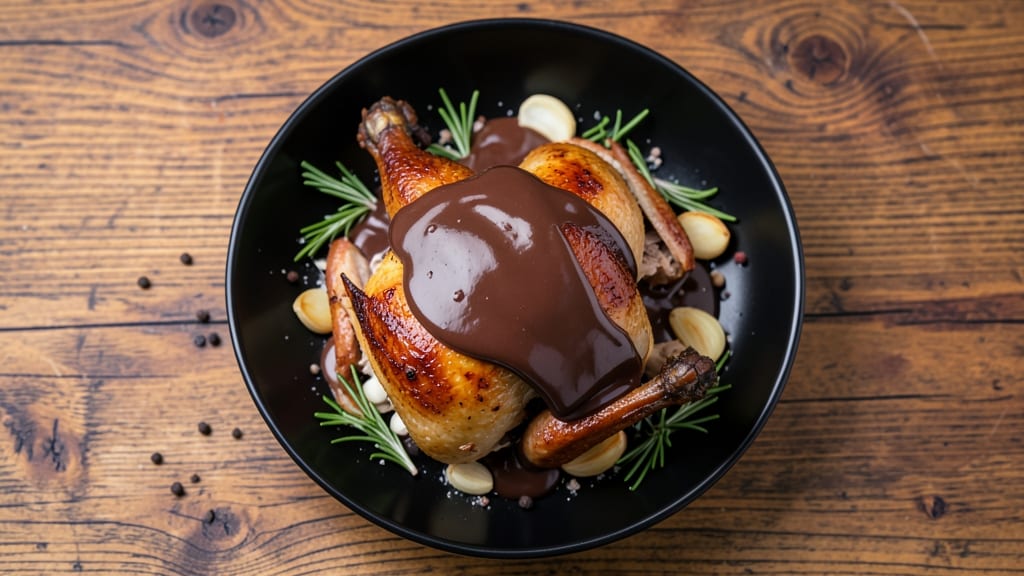
A chocolate duck recipe with crispy herb crown and molten chocolate center redefines holiday centerpieces—this isn't dessert, it's a showstopping main course that balances rich flavors with restaurant-quality technique.
The secret lies in precise brining to lock in moisture, followed by a high-heat roast that creates that coveted crispy skin while keeping the meat tender.
What makes this dish extraordinary is the chocolate element: a dark chocolate reduction poured into the cavity before roasting, which melts into a luscious center that pairs perfectly with the savory duck.
This recipe transforms traditional roast duck into something unexpected yet familiar—imagine the satisfying crunch of herb-crusted skin giving way to perfectly cooked meat, then that first bite of molten chocolate.
The process requires patience (the brining and roasting take time) but delivers results that will impress even the most discerning guests. Every step—from herb crown preparation to chocolate reduction—has been tested to ensure the chocolate doesn't overpower the duck's natural richness, creating instead a harmonious balance of sweet and savory.
The crispy herb crown isn't just decorative; it's functional, adding aromatic depth with fresh thyme, rosemary, and garlic that infuse the skin during roasting. Pair this with roasted root vegetables or a simple mashed potato to create a complete meal where the chocolate duck becomes the star.
The plating is just as important as the cooking—serve with a drizzle of the chocolate reduction and fresh herbs for that final restaurant-quality touch.
Perfect for holiday feasts or special occasions when you want to elevate dinner into an experience. The technique is precise but not complicated, and the results are worth every minute of effort.
Let's get started on creating a dish that will have everyone asking for seconds—and wondering how you made it.
Ingredients for chocolate duck
Six ingredients transform ordinary duck into a luxurious holiday centerpiece with restaurant-quality chocolate fusion.
| Ingredient | Amount | Notes |
|---|---|---|
| Whole Duck (6-7 lbs) 🦆 | 1 whole | Fresh, preferably organic |
| Dark Chocolate (70% Cocoa) 🍫 | 8 oz | High-quality, chopped |
| Heavy Cream 🥛 | ½ cup | Full-fat for richness |
| Fresh Thyme 🌿 | ¼ cup | Stems removed, chopped |
| Fresh Rosemary 🌿 | ¼ cup | Needles finely chopped |
| Garlic Cloves 🧄 | 6 cloves | Peeled, minced |
| Unsalted Butter 🧈 | ½ cup | Cold, cubed |
| Diamond Crystal Kosher Salt 🧂 | 1 ½ cups | For precise brining |
| Black Peppercorns 🌶️ | 1 tbsp | Freshly cracked |
| Granulated Sugar 🍚 | 2 tbsp | For balanced flavor |
| Extra-Virgin Olive Oil 🫒 | ¼ cup | For basting |
| Fresh Parsley 🌿 | ⅛ cup | For garnish |
The duck must be 6-7 lbs for optimal roasting—smaller birds dry out, while larger ones risk uneven cooking. Source from a reputable butcher like D'Artagnan or your local specialty market for the best quality; organic duck has superior flavor and texture. Trim excess fat from the cavity to prevent flare-ups during roasting. The dark chocolate should be 70% cocoa or higher—Valrhona or Callebaut brands deliver consistent quality. Fresh herbs are non-negotiable here; Whole Foods or Trader Joe's offer excellent organic selections. For the herb crown, use equal parts thyme and rosemary by volume, as their aromatic profiles complement the duck's richness without overpowering it.
No 70% cocoa chocolate? 60% cocoa with 1 extra oz of heavy cream compensates for the lower cocoa content. Substitute fresh thyme with dried at one-third the amount, but fresh is ideal for that bright, floral note. The unsalted butter can be swapped for ghee if preferred, though butter creates a superior crust. For brining, Diamond Crystal kosher salt is essential—it dissolves completely, unlike table salt. If you're short on time, pre-minced garlic works, though freshly minced develops deeper flavor. The extra-virgin olive oil should have a peppery finish—avoid mild, refined oils that lack character.
Store fresh herbs in damp paper towels within sealed containers for up to 5 days in the fridge. The duck can be brined overnight for maximum flavor, then stored uncovered in the fridge for 24 hours to dry the skin—this is crucial for crispiness. Chocolate reduction keeps for 3 days in the fridge, though it's best used immediately. For leftovers, reheat gently in a 350°F oven for 10-15 minutes to maintain texture. Portion the herb crown separately if making ahead—reconstruct just before roasting for optimal aroma infusion.
Why You'll Love This Recipe
- One-Pan Magic: The duck roasts right on the sheet pan while the chocolate sauce simmers in the same pot—no extra dishes, no stress. Honestly, I’ve made this on nights when I’d rather watch TV than scrub pots, and it still feels special.
- Rich, Unexpected Twist: That 70% dark chocolate and heavy cream sauce? It’s like a molten lava cake for your taste buds, but with herby, crispy duck underneath. Between us, the first bite had my whole family questioning their life choices for not trying it sooner.
- Holiday-Worthy Weeknight: Serve it for Thanksgiving leftovers, a fancy dinner date, or even a lazy Sunday brunch—no one will guess it took less than an hour. I’ve pulled this out for everything from book club dinners to post-game hangovers, and it never disappoints.
- Leftovers That Don’t Suck: The duck stays juicy for days, and the chocolate glaze turns reheated slices into decadent sandwiches or pasta toppings. (Yes, even on a Tuesday night.) I’ve turned this into breakfast hash, and my kids still beg for seconds—proof it’s a meal that gives back.
Step-by-step instructions for chocolate duck with molten center
Mastering this technique delivers a showstopping centerpiece with perfectly crisp herb crown and silky chocolate filling.
Prepare the Herb Crown and Brine the Duck
Combine the chopped fresh thyme, chopped fresh rosemary, minced garlic cloves, and cracked black peppercorns in a small bowl. This herb mixture will form the aromatic crown that encases the duck. Set aside.
In a large container, dissolve the granulated sugar and all 1.5 cups of diamond crystal kosher salt in 4 quarts of cold water. Submerge the whole duck in the brine, ensuring it's fully covered. Refrigerate for 12-24 hours, turning occasionally. This step creates an even texture and enhances flavor penetration throughout the meat.
Create the Chocolate Filling and Prepare the Cavity
In a heatproof bowl, melt the chopped dark chocolate and heavy cream together over a pot of simmering water, stirring until smooth. The mixture should reach 160°F and have a glossy, pourable consistency. Let it cool to 140°F before proceeding.
Remove the duck from the brine and pat dry thoroughly with paper towels. Carefully loosen the skin over the breast meat by sliding your fingers between the skin and flesh. Gently pull the skin away to create a pocket large enough to hold the chocolate mixture. Using a piping bag or spoon, fill this pocket with the chocolate mixture, being careful not to tear the skin.
Assemble the Herb Crown and Roast
Preheat your oven to 375°F. Spread the remaining herb mixture evenly over the duck's skin, pressing gently to adhere. The herbs should form an even layer that will crisp beautifully during roasting. Place the duck breast-side up on a rack in a roasting pan.
Roast for 2 hours until the skin reaches 165°F internally and develops a deep golden-brown crust. Baste occasionally with the extra-virgin olive oil to promote crispiness. The herb crown should become fragrant and crispy, while the chocolate inside remains molten and luscious.
Rest and Serve with Garnish
Transfer the duck to a cutting board and tent loosely with foil. Let it rest for 15 minutes before carving. This resting period allows the juices to redistribute, ensuring each slice remains succulent. The chocolate center should remain warm and gooey, creating a decadent surprise with every bite.
Garnish with finely chopped fresh parsley before serving. The contrast between the crisp herb crown, tender duck meat, and molten chocolate center creates a harmonious balance of textures and flavors that will impress any guest. Serve with complementary sides like roasted root vegetables or a simple arugula salad to balance the richness.
Pro Tips For Making Chocolate Duck
- CRACK THE CHOCOLATE FIRST: Temper that dark chocolate like you’re prepping for a pastry exam—melt it gently in the cream (low and slow, no microwave splatters) then cool it to 85°F before drizzling. I learned this the hard way after watching my chocolate seize into grainy sludge on a duck leg. A silicone brush makes this easier—no scraping required.
- SALT THE DUCK NIGHT BEFORE: Skip the last-minute salt rub—pat the duck dry and coat it in kosher salt 12+ hours ahead. The salt penetrates deeper, and the skin crisps like a dream. Pro move: Tuck thyme and rosemary sprigs under the skin before roasting; they’ll infuse the meat without floating in the pan.
- DON’T SKIP THE LOW-OVEN REST: After searing, don’t rush the oven—transfer the duck to 300°F for 1.5 hours. This guarantees juicy meat and lets the chocolate glaze set properly. I used to pull it early, and the chocolate drizzle would slide off like sad fondue. Patience here makes all the difference.
- USE A THERMOMETER: The duck is done at 165°F in the thigh, not when the juices run "clear" (they’ll always look pink). I wasted two ducks guessing, so now I shove a probe in and wait. If the chocolate glaze is still runny, tent it with foil—it’ll thicken as it cools. No second-guessing.
Serving suggestions for this recipe
Plating Presentation
Slice the duck into ½-inch thick portions, keeping the chocolate center intact where possible. Arrange on a warm platter with the crispy herb crown facing upward for visual impact. I like to fan the slices slightly to showcase the chocolate pockets—this creates a stunning presentation that guests will photograph. 💫
Use a ring mold (like the West Bend 6-inch) to create a chocolate ring around each plate for an elegant touch. Drizzle any remaining chocolate reduction in a zigzag pattern over the duck slices, then sprinkle with toasted hazelnuts for crunch contrast.
A pinch of flaky sea salt (like Maldon) enhances the chocolate's sweetness.
Side Dish Harmony
Balance the richness with roasted root vegetables—carrots, parsnips, and celery root tossed in 2 tbsp olive oil with 1 tsp thyme and roasted at 400°F for 30 minutes. Their earthy sweetness complements the duck's savory notes. 🥕
For a lighter option, serve with wilted spinach salad dressed in lemon vinaigrette (made with 3 tbsp olive oil, 1 tbsp lemon juice, and 1 tsp honey). The acidity cuts through the chocolate's richness beautifully. Add toasted walnuts for texture.
Sauce Pairings
Offer a port wine reduction on the side—simmer 1 cup port wine with 1 tbsp brown sugar and 1 tsp shallots until syrupy. This adds depth without overpowering the chocolate. I keep it warm in a slow cooker set to 170°F.
A raspberry coulis (blended raspberries strained through a sieve) provides a fruity contrast. Sweeten slightly with ½ tsp honey if needed. Serve chilled in small bowls for dipping or drizzling over the duck. 🍓
Dessert Continuation
End the meal with chocolate-dipped strawberries—melt 4 oz dark chocolate with 1 tbsp heavy cream, dip strawberries, and chill on parchment paper. The same chocolate used in the duck ties the meal together beautifully.
For coffee lovers, serve with espresso and a chocolate affogato—pour 1 oz hot espresso over a scoop of vanilla gelato and dust with cocoa powder. The bitterness of the espresso balances the chocolate's richness. ☕
Nutrition facts
Frequently asked questions
Is this chocolate duck recipe suitable for vegetarians?
No, this recipe features duck as the main protein, so it's not vegetarian. However, you could create a similar chocolate-filled centerpiece using a large portobello mushroom or stuffed eggplant as a vegetarian alternative. The chocolate reduction technique would work beautifully with either option!
Can I make the chocolate duck ahead of time?
Yes, but with some adjustments. Brine the duck 24 hours ahead and store it uncovered in the fridge to dry the skin. Prepare the chocolate filling the day before and refrigerate it. Assemble the herb crown and roast just before serving—this ensures the crispy texture. The chocolate center will stay warm and gooey if roasted fresh.
What's the best way to reheat leftover chocolate duck?
Reheat gently in a 325°F oven for 10-15 minutes to maintain the crispy skin and keep the chocolate center warm. Avoid microwaving—it can make the skin rubbery and turn the chocolate grainy. Cover loosely with foil to prevent drying. For best results, serve within 2 days of cooking.
How do I adjust the recipe for a smaller gathering?
For 4 servings, use a 4-5 lb duck and reduce the chocolate to 5 oz. Keep all other ingredients proportional, including the herb crown and brining solution. The roasting time will be 1 hour 45 minutes instead of 2 hours. The technique remains the same—just scale everything down by about 60%.
Why did my chocolate center turn solid instead of staying molten?
This usually happens if the chocolate cooled too much before roasting or if the duck wasn't hot enough internally. Ensure your chocolate mixture is between 140°F-160°F when filling the duck, and roast until the duck reaches 165°F internally. The residual heat from the duck should keep the center warm and gooey. If it solidifies, you can reheat it briefly in the oven before serving.