
Desserts
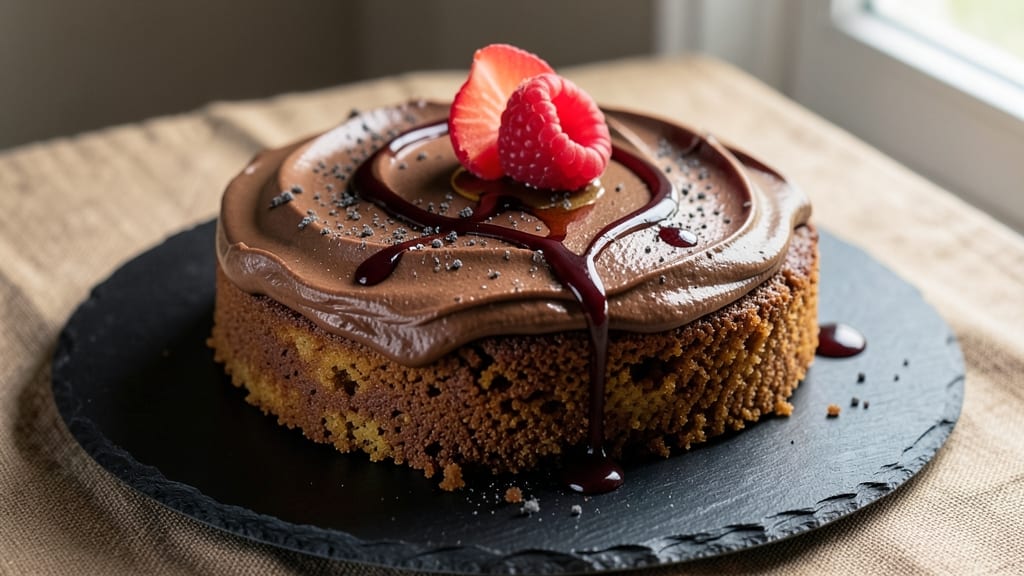
This chocolate frosting no butter recipe delivers all the rich, velvety decadence of traditional frosting—without a single stick of butter. ✨ The secret lies in using refined coconut oil and aquafaba for a silky, spreadable texture that pipes beautifully and sets perfectly on cakes, cupcakes, or cookies.
I developed this version after realizing most vegan frostings either taste greasy or lack that deep cocoa intensity we all crave.
The base relies on high-quality cocoa powder and a touch of espresso powder for complexity, while coconut oil provides the fat needed for smoothness. Aquafaba (the liquid from canned chickpeas) replaces butter entirely, creating a light yet stable structure that holds its shape when piped.
This isn’t just a butter substitute—it’s a superior version that’s dairy-free, egg-free, and just as indulgent.
What you’ll end up with is a frosting that’s silky smooth, deeply chocolatey, and perfectly balanced—not too sweet, not too bitter. The texture stays spreadable at room temperature but firms up slightly when chilled, making it ideal for decorating.
Whether you’re frosting a layer cake or filling cupcakes, this recipe delivers professional results every time.
For extra flavor depth, I recommend adding a splash of vanilla extract or a pinch of cinnamon. The possibilities for customization are endless while keeping the base recipe foolproof. Let’s get started on creating this rich, plant-based frosting that tastes like a bakery secret.
Ingredients for chocolate frosting no butter
Nine simple ingredients transform into velvety chocolate frosting without butter or eggs.
| Ingredient | Amount | Notes |
|---|---|---|
| Refined Coconut Oil 🥥 | ½ cup | Solid at room temperature for structure |
| Unsweetened Cocoa Powder 🍫 | ¾ cup | High-quality Dutch-processed preferred |
| Aquafaba 🥫 | ½ cup | From high-quality canned chickpeas |
| Granulated Sugar 🍚 | 1 ½ cups | Fine grain for smooth texture |
| Pure Vanilla Extract 🌿 | 1 tbsp | Bottled for authentic flavor |
| Instant Espresso Powder ☕ | 1 tsp | Enhances chocolate depth |
| Sea Salt 🧂 | ¼ tsp | Fine grain for balance |
| Almond Milk 🥛 | 2 tbsp | Unsweetened for neutral flavor |
| Ground Cinnamon 🌶️ | ½ tsp | Optional for warmth |
The cocoa powder is non-negotiable—Hershey's Special Dark or Valrhona for that deep, professional chocolate flavor. Refined coconut oil gives the frosting its signature silky texture, but make sure it's refined (unrefined has a coconut aftertaste). Aquafaba is the secret star—use low-sodium canned chickpeas and drain the liquid into a jar. The almond milk adds just enough moisture to balance the richness without overpowering the chocolate. For the best results, grab organic vanilla extract from Trader Joe's or Whole Foods—it makes a noticeable difference.
No refined coconut oil? Vegan butter works in a pinch, but the texture will be denser. Skip the espresso powder? Instant coffee granules at half the amount work too. The almond milk can be swapped for oat milk if you're avoiding nuts. For extra richness, add 1 tbsp melted vegan dark chocolate. The cinnamon is optional but recommended—it adds warmth without overpowering. If you're using a stand mixer, the frosting will come together faster, but a hand mixer works just fine. Just be patient and scrape the bowl often for that ultra-smooth finish.
This frosting keeps beautifully in the fridge for up to 1 week, covered tightly. For best piping results, let it sit at room temperature for 10-15 minutes before decorating. If it thickens too much, warm it gently in the microwave for 10-second bursts. For long-term storage, freeze portions in an airtight container for up to 3 months. Thaw in the fridge overnight before using. Trust me, the first time you pipe this onto a cake and see that perfect swirl, you'll never go back to butter-based frosting.
Why You'll Love This Recipe
- Here’s what sold me: the cocoa powder isn’t just in there—it sings. Deep, bittersweet, and balanced by the vanilla’s warmth, but never overpowering. The coconut oil adds this subtle toasty note that makes it taste like a bakery’s secret, not a shortcut. (Yes, even on a Tuesday night when I’m craving something decadent but don’t want to deal with melted butter stains.)
- No Butter, No Problem: I’ll admit—when I first saw aquafaba in the ingredients, I raised an eyebrow. But that chickpea brine? It whips into something almost as lush as heavy cream, and the refined coconut oil? Melts into a velvety base without a trace of butter’s richness. Three ingredients, five minutes of hands-off beating—that’s all it takes.
- Rich Without Guilt: Here’s what sold me: the cocoa powder isn’t just in there—it sings. Deep, bittersweet, and balanced by the vanilla’s warmth, but never overpowering. The coconut oil adds this subtle toasty note that makes it taste like a bakery’s secret, not a shortcut. (Yes, even on a Tuesday night when I’m craving something decadent but don’t want to deal with melted butter stains.)
- Pantry Staple Power: Between us, I always have these five things on hand: sugar, cocoa, vanilla, chickpeas (for aquafaba), and coconut oil. That means I can frost cupcakes, swirl into brownies, or even drizzle over toasted banana slices—no last-minute grocery runs. Honestly, I’ve used this frosting for everything from birthday cakes to “I just need chocolate” midnight snacks.
Step-by-step instructions for chocolate frosting no butter recipe
Here's how to create a velvety, butter-free frosting that rivals traditional recipes.
🍳 Step 1: Warm the Coconut Oil and Aquafaba
In a medium heatproof bowl, combine the 0.5 cup refined coconut oil and 0.5 cup aquafaba. Place the bowl over a pot of barely simmering water (double boiler method) and whisk continuously for 3-4 minutes until the coconut oil melts completely and the mixture reaches 160°F.
You'll notice the aquafaba begins to thicken slightly as it warms—this is crucial for achieving that silky texture later. If you don't have a thermometer, look for small bubbles forming around the edges and a slight sheen on the surface. Remove from heat immediately once melted to prevent overheating.
👨🍳 Step 2: Whisk in Sugar and Espresso Powder
Return the bowl to your work surface and let it cool slightly for 2 minutes (it should be warm to the touch but not hot). Add the 1.5 cups granulated sugar and 1 tsp instant espresso powder all at once. Using a stand mixer fitted with the whisk attachment (or a hand mixer), beat on medium-high speed for 4-5 minutes.
Here's where the magic happens—the mixture will transform from thick and grainy to pale, glossy, and ribbon-like. You'll know it's ready when the whisk leaves clean, glossy ribbons that hold their shape for 10-15 seconds before dissolving. If it's not thickening, add 1 tsp almond milk at a time until it reaches the proper consistency.
🥘 Step 3: Incorporate Cocoa and Aromatics
With the mixer running on low speed, gradually add the 0.75 cup unsweetened cocoa powder through a fine-mesh sieve, whisking constantly to prevent lumps. Once fully incorporated, add the 1 tbsp pure vanilla extract, 0.25 tsp sea salt, and 0.5 tsp ground cinnamon.
Mix for another 1-2 minutes until completely smooth and all ingredients are fully combined. The frosting should now be thick, glossy, and dark chocolate brown in color. Taste a small amount—it should be rich and slightly bitter from the cocoa, with a hint of espresso depth. If it needs sweetness adjustment, add 1 tbsp almond milk at a time until balanced.
⏰ Step 4: Cool and Adjust Consistency
Transfer the frosting to a clean bowl and let it cool at room temperature for 15-20 minutes. As it cools, it will thicken slightly—this is normal. If it becomes too thick for spreading (it should be pipeable but not runny), add 1 tsp almond milk at a time until you reach a smooth, spreadable consistency.
Here's the thing—this frosting thickens as it cools, so don't overdo the almond milk. You want it to hold its shape on a cake but still be smooth enough to spread easily. For best results, use it immediately for piping or spreading, as it will continue to set up slightly over time.
Pro Tips For Making Chocolate Frosting No Butter
- Melt the Coconut Oil Slowly: If you dump cold coconut oil into the mix, you’ll end up with a grainy, lumpy frosting—no matter how much you beat it. Warm the oil to just under body temperature (around 85°F/29°C) first, then let it cool slightly before adding it to the cocoa and sugar. That way, it blends in smooth without turning the whole thing into a waxy mess.
- Whip the Aquafaba First: Cold aquafaba is stubborn. Before you even think about adding sugar, whip the chickpea brine until it’s thick and glossy—like soft peaks, but not quite there. This takes about 3-4 minutes with a hand mixer. I learned this the hard way: skipping this step means your frosting will never hold its shape, no matter how much you beat it later.
- Sift the Cocoa Powder: Unsweetened cocoa powder is full of tiny clumps that hide in plain sight. Sift it directly into the bowl with the sugar before adding anything else—this cuts down on beating time and prevents gritty texture. Yes, it’s an extra step, but your frosting will thank you. (And so will your patience.)
- Add Vanilla Last, Then Beat: Vanilla extract is volatile—heat and overmixing can kill its flavor. Stir it in just before you stop beating, then give the whole batch one final 10-second whack with the mixer. This keeps the aroma bright and avoids that "cooked" aftertaste that happens when you blend it in too early. Trust me, your taste buds will notice.
Common mistakes when making perfect results
Overmixing the Aquafaba
One of the biggest mistakes is beating the aquafaba too long before adding other ingredients. Overmixing creates too much air, which leads to a frosting that's too light and unstable. I've seen this happen when people whip the aquafaba alone for more than 1-2 minutes before adding sugar.
The goal is to warm and slightly thicken it—just enough to create a smooth base, not a meringue. 🥫
Using Unrefined Coconut Oil
Unrefined coconut oil has a strong coconut flavor that can overpower the delicate chocolate notes in your frosting. I made this mistake early on and ended up with a frosting that tasted more like a tropical dessert than chocolate.
Always use refined coconut oil for that neutral, buttery texture. If you're out of refined, vegan butter works but will make the frosting denser.
Skipping the Double Boiler
Some recipes suggest melting coconut oil in the microwave, but this can lead to uneven heating and potential burning. The double boiler method ensures gentle, even warming of both the coconut oil and aquafaba.
I learned this the hard way when my first batch had a slightly burnt taste from overheating. Keep the water at a bare simmer—just enough to create steam, not bubbles.
Adding Cocoa Powder Too Fast
When incorporating the cocoa powder, many people dump it all in at once, which creates lumps that are nearly impossible to eliminate. I recommend adding it gradually through a fine-mesh sieve while mixing on low speed.
This ensures a completely smooth, lump-free frosting. If you do get lumps, don't panic—just mix in 1 tsp almond milk and reincorporate.
Ignoring the Cooling Phase
This frosting needs time to thicken as it cools, but many people rush ahead and try to use it immediately. If you pipe or spread it too soon, it'll be too runny and won't hold its shape.
Let it sit at room temperature for at least 15-20 minutes before using. For best results, chill it in the fridge for 30 minutes if you're piping intricate designs.
Over-Adjusting Sweetness
The sugar content in this recipe is carefully balanced to complement the rich cocoa flavor. Adding extra sugar can make the frosting taste cloyingly sweet rather than properly balanced. Taste as you go—if it needs adjustment, add 1 tbsp almond milk (which dilutes slightly) rather than more sugar.
The espresso powder already enhances the chocolate depth, so resist the urge to sweeten excessively. 🍫
Nutrition facts
Frequently asked questions
Can I make this frosting without aquafaba?
Yes! If you don't have aquafaba, substitute it with 0.5 cup vegan butter or 0.5 cup refined coconut oil (no need to warm it). For a lighter texture, use 0.5 cup unsweetened applesauce instead, but the frosting may be slightly less stable. The aquafaba creates the ideal airy yet smooth consistency, but these alternatives work in a pinch.
How do I adjust the sweetness for kids?
For a sweeter version, increase the sugar to 1.75 cups or add 1-2 tbsp maple syrup while mixing. For a milder chocolate flavor, reduce the cocoa powder to 0.6 cups. Always taste as you go—kids' palates often prefer less bitterness, so the espresso powder can be omitted entirely if needed.
Will this frosting work for piping decorations?
Once cooled for 15-20 minutes, this frosting pipes beautifully through a Wilton 1M tip for rosettes or a star tip for borders. For extra stability, chill it in the fridge for 30 minutes before piping. If it's too thick, add 0.5 tsp almond milk at a time until smooth. The coconut oil gives it just enough firmness to hold shapes.
Can I use this frosting for filling cupcakes?
Yes, but with a few adjustments. For cupcake filling, reduce the sugar to 1.25 cups to prevent sogginess. Pipe the frosting directly into the center of each cupcake, then top with a second cupcake or a dollop. The frosting will soften slightly but maintain its structure. For extra stability, chill the cupcakes for 1 hour before serving.
Why did my frosting turn grainy?
Graininess usually means the cocoa powder wasn't fully incorporated or the mixture cooled too quickly. To fix it, whisk in 1 tsp almond milk at a time until smooth. For prevention, always sift the cocoa powder through a fine-mesh sieve while mixing on low speed. If the frosting thickens too much while fixing, warm it gently in 10-second microwave bursts until spreadable.