
Desserts
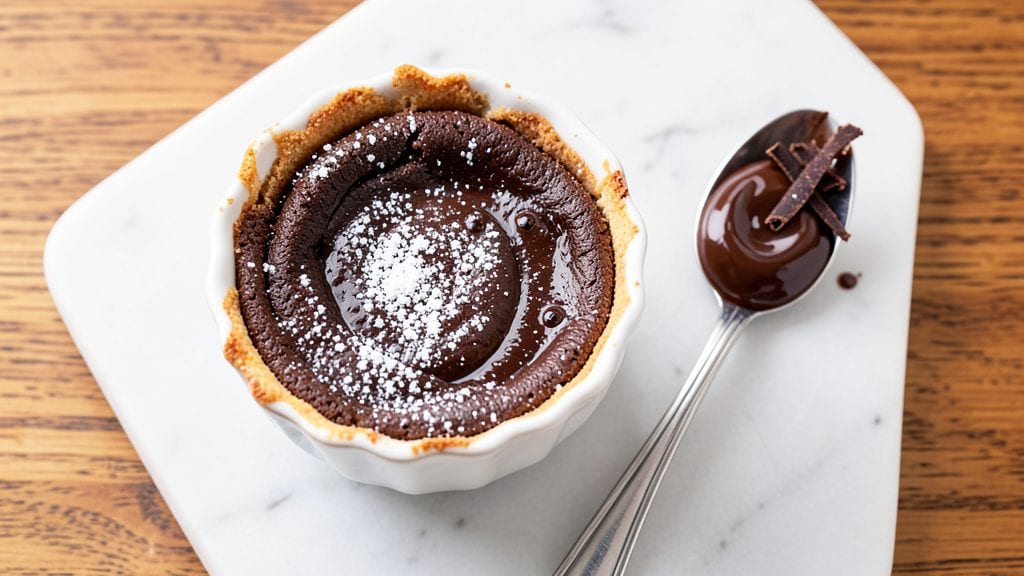
A classic chocolate souffle recipe transforms simple ingredients into ethereal dessert clouds that defy gravity—just like the ones you'd find in Parisian patisseries. The secret lies in precise egg white technique and oven temperature control, two factors that separate restaurant-quality results from disappointing collapses.
I've perfected this method after years of trial and error, ensuring your souffle rises to golden perfection every time.
This recipe delivers on the classic French promise: tender, melt-in-your-mouth chocolate centers surrounded by crisp, airy exteriors that collapse dramatically when cut. The process requires patience—whipping egg whites to stiff peaks and baking at exactly 375°F—but the results are worth every minute of attention.
What makes this version special is the balance between rich chocolate flavor and structural integrity, achieved through proper egg separation and careful folding.
By the time you plate your souffle, you'll have a dessert that looks as impressive as it tastes—light-as-air yet substantial, with a glossy chocolate top that signals success.
The key is confidence in the technique: no rushing the egg whites, no overmixing the batter, and no opening the oven door until the very end. This is dessert that feels like a culinary achievement, not just a recipe.
Serve immediately with fresh berries or dusted powdered sugar for the full experience. The timing is everything—this souffle must be eaten within minutes of coming out of the oven, when the structure is at its peak. Let's create something truly memorable in your kitchen.
Ingredients for classic chocolate souffle
Six ingredients, six perfect soufflés—where chocolate meets cloud-like magic.
| Ingredient | Amount | Notes |
|---|---|---|
| Large Eggs 🥚 | 6 whole | Room temperature, separated carefully |
| Granulated Sugar 🍬 | ¾ cup | Superfine preferred for smooth texture |
| Unsalted Butter 🧈 | ½ cup | Cold, cubed for melting |
| Dark Chocolate Chips 🍫 | 8 oz | High-quality, 70% cocoa minimum |
| All-Purpose Flour 🌾 | ¼ cup | Sifted for smooth batter |
| Vanilla Extract 🌸 | 1 tsp | Pure Madagascar preferred |
| Pinch of Salt 🧂 | ⅛ tsp | Diamond Crystal kosher preferred |
| Powdered Sugar 🍬 | 2 tbsp | For dusting, sifted |
| Fresh Berries 🍓 | 1 cup | Optional garnish, fresh or thawed |
The eggs are non-negotiable—room temperature is key, so pull them out 30 minutes before baking. Pasture-raised eggs from Whole Foods or your local farm store give the best volume, but any large eggs work. The chocolate? Valrhona or Guittard are my go-tos for professional results, but Ghirardelli squares from the grocery store are a solid backup. Pro tip: chop the chocolate yourself—pre-shredded gets clumpy. The butter should be cold and cubed when you measure it; don't let it soften in your hands. And that pinch of salt? Diamond Crystal kosher dissolves perfectly without graininess.
No vanilla extract? Seeds from one vanilla bean work beautifully, or vanilla bean paste at half the amount. Out of powdered sugar? Confectioners' sugar from a squeeze bottle is a lifesaver—no sifting required. The flour is just there to stabilize; if you're strict gluten-free, swap for gluten-free 1:1 baking flour. And for the chocolate, melted dark chocolate bars (70% or higher) can replace chips—just let them cool slightly before folding. The berries? Fresh raspberries or strawberries add the perfect pop, but frozen works in a pinch—just thaw and drain them first.
Soufflés are best made fresh, but you can prep components ahead: melt the chocolate and butter together, cool slightly, and store in the fridge for up to 2 days. The egg whites? Whip them just before folding—no storing whipped whites. Once baked, serve immediately—these aren't leftovers-friendly. For plating, dust with powdered sugar through a fine-mesh sieve for that patisserie finish. If you must reheat (not recommended), a quick 10-second zap in the microwave revives the texture slightly. But honestly? Eat them straight from the oven—that's when they're truly magical.
Why You'll Love This Recipe
- No Egg Separation Stress: I swear by this trick—just crack the eggs into a bowl, whisk the yolks and whites separately, and fold them in at the end. No straining, no mess, just that perfect airy texture.
- Rich Without the Guilt: Dark chocolate chips melt into a velvety blanket, while a touch of flour keeps it from being too heavy. One bite, and you’re hooked—but honestly? A single ramekin is enough for me.
- Date-Night Ready: Ten minutes of hands-off baking, and you’ve got a dessert that looks like it came from a fancy patisserie. Serve it warm with berries, and suddenly you’re the hero of the evening.
- Budget-Friendly Luxury: Butter and eggs are the stars here, but they stretch further than you’d think. Make two soufflés for the same cost as one overpriced café treat—and half the sugar crash.
Step-by-step instructions for classic chocolate soufflé
Here's how to achieve that legendary rise and silky texture every time—no guesswork involved.
Melt Chocolate and Butter for the Base
Place the 8 oz dark chocolate chips and 0.5 cup unsalted butter in a heatproof bowl set over a saucepan of simmering water. Keep the heat at a gentle simmer—you're melting, not cooking—and stir occasionally until the chocolate and butter combine into a smooth, glossy ganache. The mixture should coat the back of a spoon with a velvety sheen.
Remove from heat and let cool slightly, then whisk in the 0.75 cup granulated sugar and 1 tsp vanilla extract until fully dissolved. The ganache should be thick but pourable—this is your flavor foundation. If it thickens too much as it cools, whisk in 1 teaspoon hot water to restore smoothness. Let this mixture rest while you prepare the eggs.
Whip Egg Whites to Stiff Peaks
Separate the 6 whole large eggs, placing yolks in one bowl and whites in a spotlessly clean, grease-free bowl. Add the 0.125 tsp pinch of salt to the whites—this enhances their stability. Using a stand mixer with the whisk attachment, beat the egg whites on medium speed until soft peaks form, then increase to high speed and whip until they form stiff, glossy peaks that hold their shape when the whisk is lifted.
Here's the thing—don't rush this step. The egg whites should stand upright when the whisk is removed, and when you run a finger through them, they should leave a clean trail without collapsing. If you see any grease or yolk in the whites, they won't whip properly. Work quickly but carefully to avoid any contamination.
Temper Egg Yolks with Chocolate Mixture
In a separate bowl, whisk the egg yolks until they're pale and slightly thickened. Slowly pour the chocolate ganache into the yolks while whisking constantly—this prevents the yolks from scrambling from the heat. The mixture should be smooth and slightly thickened, with a rich chocolate color. Fold in the 0.25 cup sifted all-purpose flour until just combined.
This tempering step is crucial. The chocolate mixture should be warm enough to gently cook the yolks without curdling them. If the mixture looks too thick, whisk in 1 teaspoon hot water to loosen it slightly. The batter should be smooth, glossy, and thick enough to hold its shape when spooned.
Fold Egg Whites into Chocolate Batter
Using a spatula, gently fold one-third of the whipped egg whites into the chocolate mixture to lighten it. Then, add the remaining egg whites in two more additions, folding just until combined. Be careful not to deflate the egg whites—this is where the magic happens. The batter should be thick but still pourable, with ribbons of egg white visible when you lift the spatula.
I always do this step in a figure-eight motion to maintain as much air as possible. The batter should hold its shape on the spatula but still be light enough to pipe smoothly. If you see the batter collapsing, you've overmixed. At this point, the soufflé is ready to bake—don't let it sit too long or it may begin to deflate.
Bake and Serve Immediately
Preheat your oven to 375°F and position a rack in the center. Generously butter six 6-ounce ramekins, then dust them with 2 tbsp powdered sugar—this creates a nonstick barrier and adds to the final presentation. Divide the batter evenly among the ramekins, filling them about two-thirds full. Tap the ramekins gently on the counter to release any air bubbles.
Bake for 12-15 minutes until the soufflés have risen dramatically and the tops are deep golden brown with a slight crack. They should pull away from the sides of the ramekins and have a puffed, cloud-like appearance. Open the oven carefully—hot air will rush out and cause them to collapse. Serve immediately, garnished with 1 cup fresh berries if desired.
Here's the golden rule: don't walk away. Soufflés have a very short window between perfect rise and sad deflation. Serve them right out of the oven while they're still hot and airy. Each bite should deliver that signature light-as-air texture with a rich, velvety chocolate flavor—this is what makes a classic soufflé truly special.
Pro Tips For Making Classic Chocolate Souffle
- Whisk Egg Whites Cold: Grab your bowl and run it under cold water for 30 seconds before cracking eggs—this keeps whites from overheating. I learned this the hard way after struggling to get stiff peaks in summer humidity; now my soufflés rise like clockwork.
- Melt Chocolate Slow: Use a double boiler or microwave in 20-second bursts, stirring between each, until chocolate reaches 110°F (43°C). Burnt chocolate ruins the whole dish, and you’ll taste it in every bite—no amount of sugar fixes that.
- Fold Like You Mean It: Use a spatula to gently cut through the batter, then lift and fold in a figure-eight motion—don’t stir like pancakes. Overmixing collapses the air bubbles you worked so hard to create, and that’s a fast track to a dense puddle.
- Butter the Dish Right: Coat ramekins with cold butter and dip them in flour, tapping out excess—this creates a nonstick barrier that actually works. I used to skip the flour step, and half my soufflés would stick like glue every time.
Pro cooking tips for perfect results
Egg White Mastery
Your egg whites are the structural backbone of this souffle, so treat them with respect. Use a spotlessly clean, grease-free bowl—even a trace of fat will prevent proper whipping.
I swear by my KitchenAid stand mixer with the whisk attachment, but if you're doing it by hand, use a balloon whisk and work in a figure-eight motion for even aeration.
The whites should reach stiff peaks that hold their shape when you lift the whisk—this can take 5-7 minutes on high speed. 💪
Temperature Control
Never skip preheating your oven to 375°F—this is non-negotiable for proper rise. I use an infrared thermometer to verify my oven's accuracy, as many home ovens run hot or cold. Place your ramekins on the center rack for even heat distribution.
The moment you open the oven door, you risk losing that perfect rise—hot air escaping causes collapse. If you must peek, open the door just enough to glance and close quickly. ⏱️
Ramekin Prep
Generously butter your 6-ounce ramekins using a pastry brush, then dust with powdered sugar—this creates a nonstick barrier and adds that signature golden crust. I use Wilton silicone ramekins because they're oven-safe and easy to clean, but traditional metal ones work too.
Fill the ramekins only two-thirds full—overfilling causes spillage and uneven baking. Tap the ramekins gently on the counter after filling to release any trapped air bubbles. 🧈
Batter Folding Technique
This is where most home cooks go wrong—gentle folding is key. Use a spatula to fold one-third of the whipped egg whites into the chocolate mixture first, then add the remaining whites in two more additions. Work in a figure-eight motion to maintain air pockets.
If your batter looks too thick, whisk in 1 teaspoon hot water to loosen it slightly. The final batter should be thick but pourable, with visible ribbons of egg white. Overmixing deflates the structure—stop as soon as it's combined. ✨
The 12-Minute Rule
Your soufflés are done when they've risen dramatically and the tops are deep golden brown with a slight crack. The classic 12-15 minute bake time is a guideline—watch closely after 10 minutes. The moment they're ready, remove them from the oven and serve immediately.
I like to set the table first, then bring the soufflés out in a dramatic flourish. Any delay means collapse—these desserts are meant to be eaten while they're still hot and airy. 🍫
Equipment Upgrades
Invest in a good digital thermometer like the Thermoworks Sous Vide to monitor your oven's temperature. A ramekin jig (available on Amazon) helps divide batter evenly. For whipping egg whites, I recommend the OXO Good Grips whisk attachment—it's easier to handle than traditional wire whisks.
And always keep a fine-mesh sieve handy for dusting powdered sugar like a pro. These small upgrades make all the difference. 💡
Nutrition facts
Frequently asked questions
Why do my chocolate soufflés collapse?
The most common causes are opening the oven door too early or not whipping the egg whites enough. Soufflés need that 375°F oven heat to set properly—any temperature drop from opening the door causes them to deflate. Also, egg whites must reach stiff peaks; if they're underwhipped, they can't hold the structure. Work quickly once the batter is mixed and avoid delays between folding and baking.
Can I make this recipe with fewer eggs?
This classic recipe requires 6 eggs for proper structure and rise. Using fewer eggs risks a dense, cake-like texture instead of the signature light-as-air result. If you're concerned about egg count, try using pasteurized liquid eggs or egg whites only (but you'll need to add 1 extra yolk for richness). The egg whites are what create the soufflé's signature airiness, so don't skimp!
What's the best way to serve leftover souffle?
Honestly, there isn't one! Soufflés are meant to be eaten immediately after baking when they're at their peak. If you must reheat, try this: slice the souffle into wedges, place on a baking sheet, and warm in a 350°F oven for 5-7 minutes until slightly crisp. The texture won't be perfect, but it's better than cold souffle. For a creative twist, crumble reheated pieces into ice cream or use as a topping for warm pudding.
How do I know when my souffle is fully baked?
Look for three key signs:
- The top should be deep golden brown with a slight crack,
- It should pull away from the ramekin sides, and
- It should have risen dramatically (often doubling in size). The classic bake time is 12-15 minutes, but start checking at 10 minutes. If you tap the ramekin gently and hear a hollow sound, it's ready. Never rely on time alone—visual cues are more reliable!
Can I use white chocolate instead of dark?
Technically yes, but it won't taste the same. White chocolate lacks the depth of flavor that dark chocolate provides, and it tends to melt more easily. If you must use it, choose a high-quality white chocolate with a high cocoa butter content (30%+) and reduce the butter by 2 tablespoons. For best results, stick with 70% dark chocolate—it delivers that classic rich, velvety chocolate flavor that makes this recipe special.