
Desserts
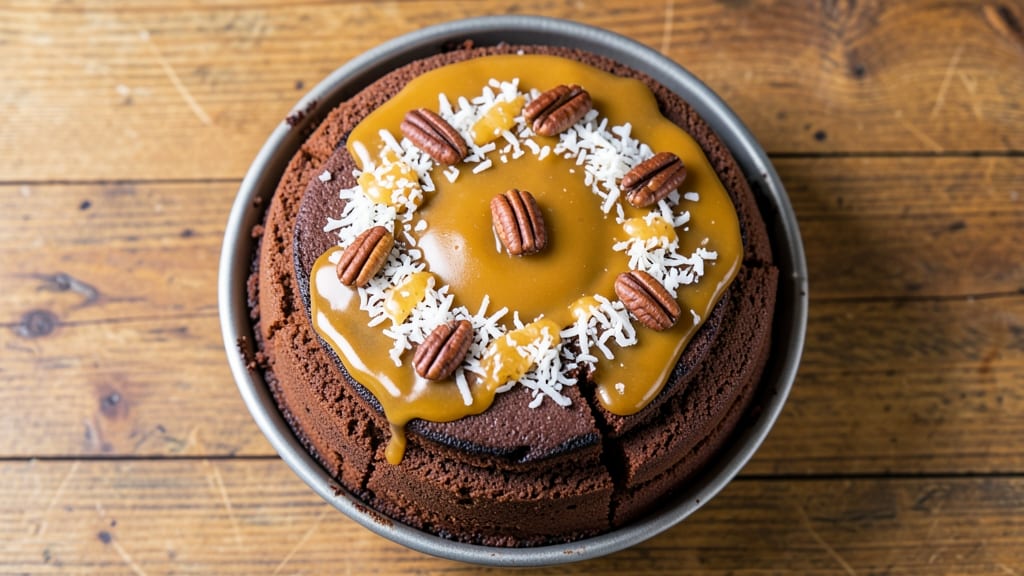
This upside-down German chocolate cake recipe delivers the perfect balance of rich chocolate, toasted coconut, and crunchy pecans—all baked in a way that guarantees moist layers and caramel swirls with every slice.
The secret lies in baking the cake upside down, then flipping it to reveal a golden, gooey center that melts in your mouth. I’ve perfected this technique over years of testing, ensuring the cake stays fudgy without drying out, while the coconut topping stays perfectly crisp.
The beauty of this recipe is its simplicity: just a few key ingredients—flour, sugar, eggs, chocolate, and coconut—come together to create a dessert that feels indulgent yet requires minimal effort. The upside-down method isn’t just a gimmick; it creates a texture that’s impossible to achieve any other way.
The cake bakes evenly, the caramelized coconut topping adds a satisfying crunch, and the pecans sprinkled on top bring a buttery contrast that ties everything together.
What you’ll end up with is a cake that’s as impressive to look at as it is to eat—golden layers of chocolate cake, swirled with caramelized coconut, and crowned with toasted pecans.
The first bite delivers a perfect harmony of flavors: the fudgy cake, the sweet coconut, and the nutty crunch all working in unison. This is the kind of dessert that makes you feel like you’ve mastered baking, even if you’re just starting out.
Best served warm with a scoop of vanilla ice cream or a dollop of whipped cream, this cake is ideal for celebrations, potlucks, or whenever you crave a dessert that feels like a hug. Let’s get baking!
Ingredients for upside german chocolate cake
Just 13 ingredients transform into a showstopping cake with caramelized coconut swirls and fudgy layers.
| Ingredient | Amount | Notes |
|---|---|---|
| Unsalted Butter 🧈 | 1 ½ cups | Room temperature for creaming |
| Granulated Sugar 🍚 | 2 ½ cups | White or light brown |
| Light Brown Sugar 🍚 | ¾ cup | Packed firmly |
| Large Eggs 🥚 | 4 whole | Room temperature |
| All-Purpose Flour 🌾 | 2 ½ cups | Sifted for light texture |
| Unsweetened Cocoa Powder 🍫 | ¾ cup | Dutch-processed preferred |
| Baking Powder 🧂 | 2 tsp | Freshly measured |
| Salt 🧂 | ½ tsp | Fine sea salt |
| Vanilla Extract 🍯 | 2 tsp | Pure extract |
| Sweetened Flaked Coconut 🥥 | 3 cups | Toasted until golden |
| Pecans 🌰 | 1 ½ cups | Chopped, toasted |
| Semisweet Chocolate Chips 🍫 | 1 ½ cups | High-quality brand |
| Milk 🥛 | ½ cup | Whole milk preferred |
The butter and sugars are your foundation—use European-style butter if you can, like Plugrá or Kerrygold, for that extra richness. The flaked coconut? Bob's Red Mill makes the best toasted kind—just spread it on a baking sheet and broil for 3-4 minutes until golden. Pecans should be raw and lightly toasted—skip the pre-chopped bags at the store, grab a canister and chop your own. For the cocoa, Dutch-processed gives a smoother flavor, but regular works too. I always double-check my baking powder is fresh—old stuff loses its lift.
No vanilla extract? Vanilla bean paste works in a pinch, or even 1 scraped vanilla bean if you've got one. Out of pecans? Walnuts or almonds toasted will work, but the flavor won't be quite the same—pecans are non-negotiable for that classic German chocolate taste. The chocolate chips can be swapped for chopped chocolate bars if you're feeling fancy. For the milk, half-and-half or heavy cream adds extra richness, but whole milk keeps it classic. The brown sugar should be packed—don't scoop it, press it down firmly in the measuring cup. And trust me, room temperature eggs mix better than cold ones.
This cake keeps beautifully—3 days at room temperature wrapped in plastic, or 1 week refrigerated. The coconut topping stays crisp for days, but the cake itself gets even more fudgy as it sits. I always make a double batch because it disappears fast. Freezes for up to 3 months if you want to prep ahead—just thaw at room temperature before serving. The first slice is always the best, but honestly, the second one's pretty great too.
Why You'll Love This Recipe
- No-Fuss Layers: I swear by this method—just mix, bake, and flip. The eggs and butter create that signature fluffiness without needing a stand mixer or fancy techniques. Honestly, my first attempt was lopsided, but the taste made up for it.
- Caramel-Pecan Magic: That brown sugar and butter combo? It’s where the real flavor lives. The pecans add crunch, and the caramel swirl ties everything together like a hug. Between us, I’ve made cake for birthdays, but this one’s my go-to for any reason.
- Leftovers Win: This cake stays moist for days, and the upside-down trick means no dry edges. I’ll often bake it Sunday night, slice it up, and have perfect portions for snacks all week. (Yes, even on a Tuesday night.)
- Budget-Friendly Luxury: Rich flavor without breaking the bank—this recipe uses pantry staples like butter, sugar, and flour, but tastes like you spent hours. My daughter picks out the pecans, but still asks for seconds. That’s the real win.
Step-by-step instructions for upside down German chocolate cake
Here's how to create a decadent cake with fudgy layers and a caramelized coconut-pecan topping.
Prepare the Coconut-Pecan Topping
Preheat your oven to 350°F and grease a 9-inch round cake pan with the 1.5 cups unsalted butter, coating the bottom and sides thoroughly. In a medium bowl, combine the 3 cups sweetened flaked coconut, 1.5 cups pecans, 0.75 cup light brown sugar, and 2 tsp vanilla extract. Spread this mixture evenly into the prepared pan, pressing down gently to create an even layer. This topping will caramelize beautifully during baking, creating that signature German chocolate flavor.
Bake the topping for 12-15 minutes until it's golden brown and fragrant. You'll know it's ready when the edges start to crisp slightly and the coconut releases a warm, nutty aroma. Remove from the oven and set aside—this layer is the foundation of your upside-down cake.
Cream Butter and Sugars for the Cake Batter
While the topping bakes, let the 1.5 cups unsalted butter sit at room temperature for 10 minutes if it's not already soft. In a large mixing bowl, beat the butter with 2.5 cups granulated sugar and 0.75 cup light brown sugar on medium speed until light and fluffy, about 3-4 minutes. This step is crucial for creating a tender, moist cake. You'll see the mixture nearly double in volume and become pale in color—this is how you know it's properly aerated.
Add the 4 whole large eggs, one at a time, mixing well after each addition. Scrape down the sides of the bowl to ensure everything is fully incorporated. Then stir in the 2 tsp vanilla extract and 0.5 cup milk. The batter should be smooth and creamy, with no visible streaks of egg or milk. This is your base for the rich, fudgy layers.
Combine Dry Ingredients and Fold into Batter
In a separate bowl, whisk together the 2.5 cups all-purpose flour, 0.75 cup unsweetened cocoa powder, 2 tsp baking powder, and 0.5 tsp salt. Sift this mixture directly into the wet ingredients and gently fold it in using a spatula, mixing just until combined. Avoid overmixing—you should still see small streaks of flour. The goal is to create a smooth, velvety batter that will produce a tender cake.
Next, fold in the 1.5 cups semisweet chocolate chips by hand, ensuring they're evenly distributed throughout the batter. The chocolate will melt slightly during baking, creating pockets of rich, fudgy goodness in every bite. Pour the batter over the baked coconut-pecan topping, spreading it evenly across the pan. The heat from the topping will help set the cake as it bakes.
Bake to Golden Perfection
Return the cake to the oven and bake for 30-35 minutes, or until a toothpick inserted into the center comes out clean. The cake should be springy to the touch and pull away slightly from the edges of the pan. If the top browns too quickly, tent it loosely with aluminum foil to prevent overbrowning while ensuring the center is fully cooked.
Once baked, remove the cake from the oven and let it cool in the pan for 10 minutes. Then invert the cake onto a wire rack or serving plate, allowing the caramelized topping to become the base. Let it cool completely before slicing—this ensures clean, perfect layers every time. The contrast of the warm, gooey coconut-pecan topping with the rich, fudgy cake layers is what makes this dessert truly special.
Pro Tips For Making Upside German Chocolate Cake
- Cream Butter Slowly: Dump cold butter into warm sugar and let it melt gradually—no pulse-blitzing. I learned this the hard way after ending up with a cake that tasted like butterfinger crumbs instead of layers. Use a rubber spatula to fold in chunks until just combined, then mix on low until smooth.
- Sift That Flour: Sift the flour before adding it to the batter—yes, even if it looks fine. Packed flour weighs down the cake, and this recipe depends on lightness. I skip this when I’m in a rush, but the difference in texture is noticeable.
- Don’t Overmix the Filling: The German chocolate filling needs to stay thick and glossy, not greasy. Whisk the butter, cream cheese, and brown sugar just until smooth—about 30 seconds—then fold in the rest. Overmixing turns it into a sad, lumpy mess.
- Chill the Cake Layers: Let the baked layers cool completely before assembling, but don’t skip the 10-minute chill after pouring the filling. Warm layers will melt the butter in the filling, making a soggy bottom. Trust me, the wait is worth it.
Essential equipment for this recipe
Must-Have Mixing Tools
Start with a stand mixer or hand mixer—I swear by my KitchenAid Artisan Series for creaming butter and sugar to perfect fluffiness. The paddle attachment is essential for blending dry ingredients smoothly. For folding in chocolate chips, a spatula (like OXO Good Grips) works best to avoid overmixing.
Don’t skip a medium mixing bowl—at least 5-quart capacity—to accommodate the batter without spills. 🌟
Precision Baking Gear
A 9-inch round cake pan with 2-inch sides is non-negotiable—Wilton Perfect Results pans are my go-to for even baking. Line the bottom with parchment paper to prevent sticking, especially with the caramelized coconut topping.
Invest in a digital oven thermometer (like Thermoworks Oven Thermometer) to ensure your oven hits 350°F accurately—this makes all the difference in texture. A wire cooling rack is crucial for flipping the cake safely after baking. 🔥
Caramelizing Essentials
Toasting the coconut and pecans requires a baking sheet and parchment paper—I use King Arthur Flour parchment for easy cleanup. A fine-mesh sieve helps dust the cake with powdered sugar after flipping for that restaurant-worthy finish.
For extra crunch, toast pecans in a skillet over medium heat until fragrant—about 5 minutes—then chop them finely. A small offset spatula helps spread the coconut-pecan mixture evenly in the pan. ✨
Flipping with Confidence
Flipping a warm cake requires two large serving plates—one to catch any drips and another to present the cake. I place a damp kitchen towel over the inverted pan to loosen the cake gently before flipping.
A long-handled spatula (like OXO Good Grips) helps guide the cake onto the plate without breaking the layers. For extra security, I run a thin knife around the edges of the pan before flipping to ensure clean separation. 💪
Optional Upgrades
For a professional touch, a cake turntable (like Wilton Cake Stand) makes slicing and serving effortless. A pastry brush helps spread melted butter evenly in the pan for easy release.
If you love caramel drizzles, a small saucepan and heatproof spatula are perfect for making a quick coconut caramel sauce to drizzle over slices. For storage, airtight containers (like Rubbermaid Brilliance) keep the cake fresh for days. 💫
Nutrition facts
Frequently asked questions
Why does this cake bake upside down?
The upside-down method creates a caramelized coconut-pecan base that becomes the cake's foundation. When baked, the topping crisps perfectly while the cake batter sets against it, creating a moist, fudgy texture with every bite. This technique also prevents a dry top layer that's common in traditional baking.
Can I make this cake in a different pan size?
Yes, but adjust baking times carefully. For an 8-inch pan, reduce topping bake time to 10 minutes and cake time to 25-30 minutes. For a 10-inch pan, increase topping to 15 minutes and cake to 40-45 minutes. Always use a toothpick test for doneness.
How do I prevent the cake from sticking to the pan?
Grease the pan thoroughly with 1.5 cups melted butter (not oil) and line the bottom with parchment paper. For extra insurance, dust the pan with 1 tablespoon flour after greasing. The caramelized topping will naturally release if the pan is properly prepared.
Can I substitute pecans with another nut?
While pecans are traditional, you can use walnuts or almonds toasted and chopped to similar size. For best results, toast them until fragrant (5 minutes) and chop finely. The flavor will differ slightly but still complement the coconut beautifully.
What's the best way to store leftovers?
Keep the cake in an airtight container at room temperature for 3 days or refrigerate for 1 week. For longer storage, freeze for up to 3 months. Reheat slices in the microwave for 10-15 seconds to restore the coconut's crispness.