
Desserts
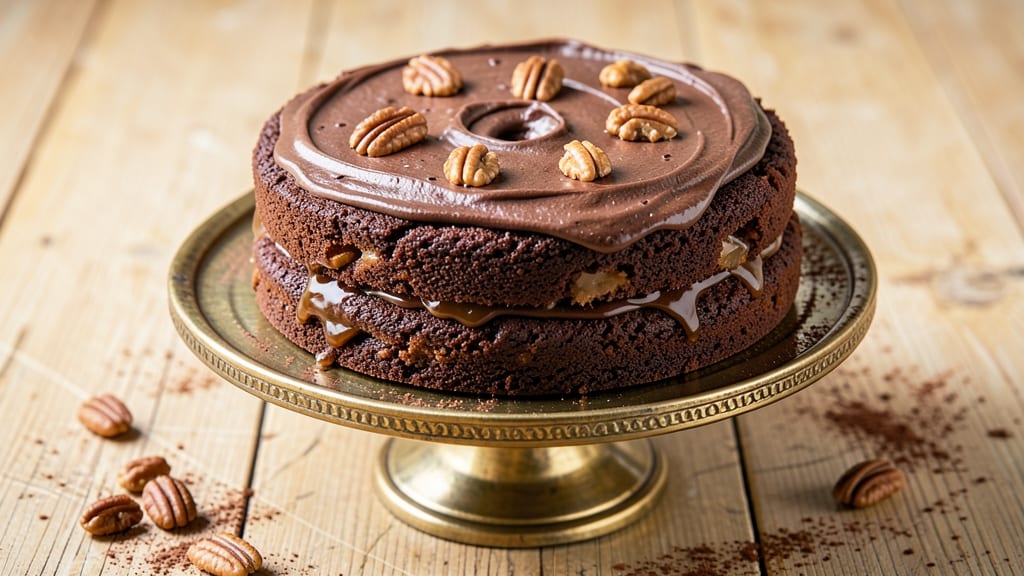
This German chocolate cake recipe from The Joy of Cooking delivers the classic combination of moist chocolate layers, rich pecan filling, and velvety fudge frosting that's become an American dessert staple.
The key lies in balancing precise baking techniques with traditional German chocolate flavors—cocoa, pecans, and coffee—to create a cake that's both nostalgic and foolproof for home bakers.
What sets this recipe apart is its layered approach: tender chocolate cake baked in a tube pan, filled with a gooey pecan mixture, then crowned with a smooth, caramelized fudge frosting.
The coffee in the batter deepens the chocolate flavor, while the pecan filling adds a satisfying crunch that contrasts beautifully with the creamy frosting. Every element works together to create that signature German chocolate experience.
The result is a cake that's rich yet not overly sweet, with a texture that's perfectly balanced—moist layers that hold together without being dense, and a frosting that's thick enough to stay in place but still smooth enough to spread.
The pecan filling provides bursts of nutty flavor in every bite, making this more than just a chocolate cake—it's a complete dessert experience.
Whether you're baking for a special occasion or simply craving a classic dessert, this recipe delivers professional-quality results with minimal fuss. The step-by-step instructions ensure you'll achieve that signature German chocolate flavor and texture, even if you're new to baking layered cakes. Let's get started on creating this timeless treat.
Ingredients for joy of cooking german chocolate cake
Classic German chocolate cake requires precise ingredients for perfect layers and rich flavors.
| Ingredient | Amount | Notes |
|---|---|---|
| All-Purpose Flour 🌾 | 2 ½ cups | Sifted for light texture |
| Unsalted Butter 🧈 | 1 ½ cups | Room temperature, full-fat |
| Granulated Sugar 🍚 | 2 cups | White sugar preferred |
| Dark Brown Sugar 🍚 | 1 cup | Packed firmly |
| Natural Cocoa Powder 🍫 | ¾ cup | Dutch-processed preferred |
| Instant Coffee Granules ☕ | 2 tbsp | Strong brew recommended |
| Large Eggs 🥚 | 4 whole | Room temperature |
| Vanilla Extract 🌿 | 2 tsp | Pure Madagascar preferred |
| Milk 🥛 | 1 cup | Whole milk preferred |
| Baking Powder 🍞 | 1 ½ tsp | Aluminum-free |
| Salt 🧂 | ½ tsp | Fine sea salt |
| Pecans 🥜 | 2 cups | Chopped, toasted |
| Light Corn Syrup 🍯 | ½ cup | For pecan filling |
| Butter 🧈 | ½ cup | Melted for frosting |
| Powdered Sugar 🍚 | 4 cups | For frosting |
The cocoa powder is non-negotiable—Dutch-processed yields the smoothest texture and deepest chocolate flavor. Ghirardelli or Valrhona brands deliver consistent quality, but store-bought Dutch-processed will work. For the pecans, raw, shelled from Trader Joe's or Costco provide the best flavor and texture. Toasting them in a dry pan before chopping enhances their nutty aroma. The butter should be room temperature—press the bowl to test; it should leave a slight indentation but hold its shape.
No Dutch-processed cocoa? Natural cocoa powder works, but reduce by 1 tbsp and add 1 tbsp extra milk to compensate for dryness. Substitute pecans with walnuts or hazelnuts, though the flavor will differ slightly. For the frosting, European-style powdered sugar (like Domino) dissolves more smoothly than American brands. The coffee granules can be swapped for instant espresso powder at half the amount—just ensure it's strong. If you lack corn syrup, honey or maple syrup works in a pinch, though the texture may vary slightly.
Store the cake layers in an airtight container between parchment paper at room temperature for up to 2 days. The pecan filling and frosting can be prepared 1 day ahead—refrigerate separately and assemble just before serving. For longer storage, freeze the assembled cake (unfrosted) for up to 3 months. Bring to room temperature before frosting. The frosting stays fresh for 5 days in the fridge, covered tightly. For best results, serve at 65°F—the cake's texture improves as it warms slightly.
Why You'll Love This Recipe
- No Mixer Needed: I swear by this—just creaming butter and sugars by hand until light, then folding in cocoa and flour. The cake layers up perfectly without a single lump, and honestly? My arms thank me for skipping the mixer.
- Rich Without Bitterness: That dark brown sugar and natural cocoa powder combo? It’s where the magic happens. The cake has this deep, molasses-kissed sweetness that doesn’t overpower, plus a subtle earthiness from the cocoa that makes every bite feel like a hug.
- Weeknight or Celebration: Serve it warm with vanilla ice cream on a Tuesday, or frost it with a simple cream cheese glaze for a birthday cake that’ll fool everyone. The same basic recipe adapts to whatever you need—no fuss, just flavor.
- Leftovers? Yes, Please: This cake stays moist for days, which means I can bake one batch and enjoy slices for breakfast, dessert, or even a quick snack. And since it’s budget-friendly (thanks to pantry staples like flour and butter), I’m not guilty about making a big pan.
Step-by-step instructions for German chocolate cake with pecan filling
Master this classic German chocolate cake with its signature pecan filling and velvety frosting—every layer delivers rich texture and deep flavor.
Prepare the Pecan Filling
In a medium saucepan, combine the 2 cups pecans, 0.5 cup light corn syrup, and 0.5 cup butter. Bring to a gentle boil over medium heat, then reduce to a simmer for 10 minutes, stirring occasionally. The mixture should thicken noticeably and develop a glossy sheen. Remove from heat and let cool completely—this filling needs to be workable when you assemble the cake layers.
Here's the thing—don't rush this step. If the filling cools too quickly, it may harden. Spread it on parchment paper to cool faster if needed, but ensure it's still pliable when you're ready to layer it between the cake.
Mix the Cake Batter
Preheat your oven to 350°F and grease three 8-inch round cake pans with butter, then line the bottoms with parchment paper. In a large mixing bowl, cream the 1.5 cups unsalted butter and 2 cups granulated sugar together until light and fluffy—about 3-4 minutes with an electric mixer. This step is critical for achieving that tender, moist crumb.
Add the 4 whole large eggs, one at a time, beating well after each addition. Mix in the 2 teaspoons vanilla extract and 1 cup milk. In a separate bowl, whisk together the 2.5 cups all-purpose flour, 1.5 teaspoons baking powder, 0.5 teaspoon salt, and 0.75 cup natural cocoa powder. Gradually fold the dry ingredients into the wet mixture until just combined—overmixing develops gluten, which can make the cake dense.
Bake the Cake Layers
Divide the batter evenly among the prepared pans. Bake for 25-30 minutes or until a toothpick inserted into the center comes out clean. The edges should be set, but the tops may still look slightly soft—this is normal. Let the cakes cool in the pans for 10 minutes, then transfer to a wire rack to cool completely. This cooling step prevents the filling from melting too quickly when you assemble the cake.
I've found that German chocolate cake benefits from being fully cooled before assembly. If you're impatient, the filling can cause the layers to sweat, leading to a soggy texture. Patience here ensures clean, sharp layers and a stable structure.
Assemble the Cake
Once the cakes are completely cool, place the first layer on a serving plate. Spread a thin layer of the cooled pecan filling over the top, then place the second layer on top. Repeat with another layer of filling, then top with the final cake layer. Press down gently to ensure the filling adheres to the cake layers.
Here's where it gets fun—dust the top and sides of the cake with a thin layer of powdered sugar to create a smooth canvas for the frosting. This step also helps the frosting adhere better and gives the cake a polished look.
Apply the Velvet Fudge Frosting
In a large bowl, beat the 1.5 cups unsalted butter until creamy, then gradually add the 4 cups powdered sugar, mixing on low speed until combined. Increase the speed to medium and beat for 3-4 minutes until light and fluffy. Add the 2 tablespoons instant coffee granules, 1 cup dark brown sugar, and 1 teaspoon vanilla extract, mixing until smooth.
Spread the frosting evenly over the top and sides of the cake, creating a smooth finish. The frosting should be thick enough to hold its shape but still spreadable. For extra flair, pipe decorative swirls or drizzle additional pecan filling around the edges. Chill the cake in the refrigerator for 1 hour before serving to allow the frosting to set properly.
Pro Tips For Making Joy Of Cooking German Chocolate Cake
- Sift the Cocoa: DESCRIPTION: I learned this the hard way—skipping the sift with natural cocoa powder leaves you with a dense, uneven cake. Use a fine-mesh sieve and tap it gently over the dry ingredients to break up clumps. The recipe’s deep chocolate flavor depends on even distribution, and this step guarantees it.
- Cream Butter Slowly: DESCRIPTION: Don’t rush the butter-sugar mix—let the stand mixer do the work at medium speed for 3-4 minutes until it’s pale yellow and fluffy. I used to eyeball it, but this is where the cake’s tender crumb starts. If it’s still grainy, keep going—your future self will notice the difference.
- Don’t Overmix the Batter: DESCRIPTION: The second you add the flour, stop folding after just 10-12 strokes. I’ve seen people beat this into submission, and it turns the cake tough. Gently fold until no dry spots remain—no more. The Joy of Cooking recipe relies on a light texture, and overmixing ruins that.
- Use Room-Temp Eggs: DESCRIPTION: Cold eggs? Skip it. Room-temperature eggs blend smoother into the batter, and that means fewer lumps and a more even texture. Pop them in a bowl of warm water for 5 minutes if you’re in a hurry—yes, even if you’re impatient like me. The cake’s moisture balance depends on it.
Wine and beer pairings for these flavors
Rich Chocolate Wines
German chocolate cake's deep cocoa and coffee notes pair beautifully with Cabernet Sauvignon or Merlot—their bold tannins and dark fruit flavors complement the cake's intensity. I recommend a 2018 California Cabernet Sauvignon like Caymus Vineyards or a 2019 Washington State Merlot from Chateau Ste.
Michelle. The wine's acidity cuts through the richness while enhancing the chocolate and pecan flavors. Serve slightly chilled (55-60°F) to balance the cake's warmth. 🍷
Creamy Dessert Whites
For those who prefer white wine, a Chardonnay with noticeable oak and vanilla undertones works wonders. Look for a 2020 Sonoma Coast Chardonnay like Kendall-Jackson—its buttery texture mirrors the cake's frosting, while citrus notes brighten the chocolate.
Alternatively, a German Riesling from the Mosel region offers a lighter option with honeyed sweetness that contrasts the cake's depth. Serve at 50-55°F to preserve its crispness.
Coffee-Infused Liqueurs
Since the cake contains instant coffee, pairing it with a Kahlúa or Tia Maria spiked dessert wine creates a harmonious experience. Mix 1.5 oz liqueur with 3 oz Chardonnay or Pinot Noir for a sophisticated sip.
The coffee notes in the cake will echo beautifully with the liqueur's caramel and vanilla flavors. For a non-alcoholic option, try cold brew coffee with a splash of vanilla syrup—it enhances the cake's depth without overpowering it. ☕
Beer Pairings
A Belgian-style Dubbel like Westmalle Trappist offers a malty sweetness that complements the cake's caramelized frosting. The beer's dark fruit and spice notes bridge the gap between the cake's richness and the coffee undertones.
For a lighter option, a German Dunkel with its toasty, slightly bitter profile provides contrast. Serve the beer at 50°F to let its flavors shine alongside the cake's warmth. 🍺
After-Dinner Digestifs
End the meal with a drambuie or amaretto to cleanse the palate and enhance the lingering chocolate flavors. The drambuie's herbal notes and honeyed sweetness echo the cake's pecan filling, while amaretto's almond flavor complements the frosting.
Serve these liqueurs neat or over ice with a splash of soda water for a refreshing finish. A small glass (1.5 oz) is perfect for balancing the cake's richness. 💫
Nutrition facts
Frequently asked questions
Can I make this German chocolate cake in a bundt pan instead of round layers?
Yes, but with adjustments! Use a 10-inch bundt pan and reduce the batter by 1 cup total (about 1/3 cup per layer). Bake at 350°F for 40-45 minutes. Skip the filling layers and spread the cooled pecan mixture over the top after baking. The frosting will still work, but expect a denser texture since bundt cakes are typically single-layer. For best results, chill the cake 2 hours before frosting to prevent melting.
Why does my German chocolate cake taste bitter? Is it ruined?
Not necessarily! Bitterness usually comes from overmixing the batter or using too much cocoa powder. Use Dutch-processed cocoa (it's smoother) and measure carefully—0.75 cup is precise. Also, avoid overbaking (check at 25 minutes). The coffee granules can intensify bitterness if overused—stick to 2 tbsp. Balance the flavor with the frosting's sweetness and a sprinkle of powdered sugar on top.
Can I substitute pecans in the filling? What about walnuts or almonds?
You can, but the flavor changes! Walnuts add earthiness and work well, while almonds provide a sweeter, nuttier taste. For best results, toast the nuts first (same as pecans) and use the same 2 cups total. The texture will be slightly different—walnuts stay chunkier, almonds blend smoother. If using almonds, reduce the corn syrup by 1 tbsp to prevent stickiness.
How do I store leftovers without making the cake soggy?
Store the cake in an airtight container at room temperature for up to 2 days, separated by parchment paper. For longer storage, freeze the unfrosted layers (wrapped individually) for up to 3 months. Refrigerate the frosting separately and assemble just before serving. Avoid storing the fully frosted cake in the fridge—it can cause condensation and make the frosting weep. Serve at 65°F for the best texture!